






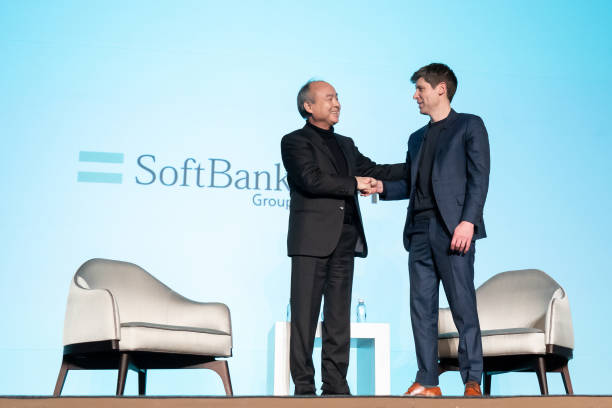
SoftBank Group is seeking a loan of up to $40 billion to fund a new, expanded investment in OpenAI, a move that would mark the Japanese conglomerate’s largest-ever borrowing entirely in U.S. dollars.
The loan, which would have a tenor of about 12 months, is being underwritten by four lenders, including JPMorgan Chase. Talks between SoftBank and the lending body are still ongoing, and final terms could change before any deal is closed.
The proposed loan comes on top of more than $30 billion SoftBank has already committed to OpenAI, the company behind ChatGPT. By the end of December 2025, SoftBank held roughly an 11% stake in the AI startup, which made it OpenAI’s second-largest external shareholder after Microsoft. If the new $30 billion commitment from the latest funding round goes through, SoftBank’s total investment in OpenAI may climb to over $60 billion.
SoftBank’s Track Record of Doubling Down
To fund its earlier OpenAI investments, SoftBank sold its entire $5.8 billion stake in Nvidia. The company has also taken out margin loans secured against its stake in Arm Holdings, the chip designer it owns roughly 90% of. And including existing credit lines, SoftBank has borrowed $18.5 billion using Arm stock as collateral.
The new $40 billion loan would be the primary vehicle driving SoftBank’s share of OpenAI’s latest $110 billion funding round, which also includes $30 billion from Nvidia and $50 billion from Amazon. That round values OpenAI at approximately $730 billion in pre-money and $840 billion in post-money.
The Financial Risks SoftBank Is Taking On
The scale of the bet has not gone unnoticed by credit rating agencies. S&P Global recently revised SoftBank’s credit outlook to negative, citing concerns that the company’s mounting exposure to OpenAI could weaken its liquidity and reduce the quality of its asset base.
SoftBank has also leaned heavily on debt and asset sales to fund over $70 billion in AI investments since 2025. As such, the company’s balance sheet is now directly tied to how well and how quickly OpenAI performs.
SoftBank does hold a cash position of around $24 billion, which provides a buffer for near-term obligations, but the debt-funded commitments to OpenAI are adding financial pressure. In its third quarter of fiscal 2025 that ended December 31, 2025, the company posted a net income of approximately $1.6 billion, which was a turnaround from a $369 million net loss in the same quarter the prior year.
A $4.2 billion gain on its OpenAI stake drove much of that improvement, and further contributed to nearly $19.8 billion in cumulative valuation gains on its OpenAI position through December 2025.
What SoftBank Is Betting On
SoftBank’s investment rationale rests on two pillars: OpenAI’s dominance in the AI market and the Stargate Project. Stargate is a $500 billion initiative to build AI data centers across the United States, with SoftBank providing financial backing, OpenAI handling operations, and SoftBank founder Masayoshi Son serving as the project’s chairman.
OpenAI has already committed to spending roughly $600 billion on AI infrastructure by the end of the decade. On the losses side, OpenAI’s own projections point to over $100 billion in losses to finance the AI data centers buildout, while HSBC estimates the figure could reach nearly $500 billion in operating losses by the same year.
SoftBank and its co-investors are effectively funding the infrastructure buildout of what could become the defining AI platform of this decade, or perhaps absorbing significant losses if the market doesn’t develop as expected.
The Competition OpenAI Still Has to Contend With
While SoftBank’s OpenAI valuation gains are real, OpenAI’s grip on the AI market is not guaranteed. According to data from Apptopia, ChatGPT’s mobile app market share in the U.S. dropped from 69.1% in January 2025 to 45.3% in January 2026, while Google’s Gemini grew from 14.7% to roughly 25% over the same period. Elon Musk’s Grok also expanded significantly, going from 1.6% to 15.2% market share.
On the enterprise side, there’s even more competition. A Menlo Ventures report from mid-2025 found that Anthropic holds roughly 32% of the enterprise AI software market compared to OpenAI’s 25%, showing that commercial dominance in AI tools does not automatically translate to consumer popularity. These dynamics represent a real risk for any investor holding a concentrated, leveraged position in OpenAI, including SoftBank.
What Happens Next
The loan is still being negotiated, and the final terms, including the exact amount, could change before any deal is signed. Representatives for both SoftBank and JPMorgan declined to comment when approached by Bloomberg, which first reported the talks.
OpenAI, for its part, is reportedly preparing for an IPO that could value the company at up to $1 trillion, according to a Reuters report. If that eventually happens, it would give SoftBank a clear path to liquidity on its investment. Until then, the Japanese conglomerate is borrowing against its most valuable assets to strengthen a bet that is already reshaping how the global tech industry finances AI.


