






Quantum computing has, for years, been one of the most anticipated technologies in the world but one of the least commercially visible. That is starting to change.
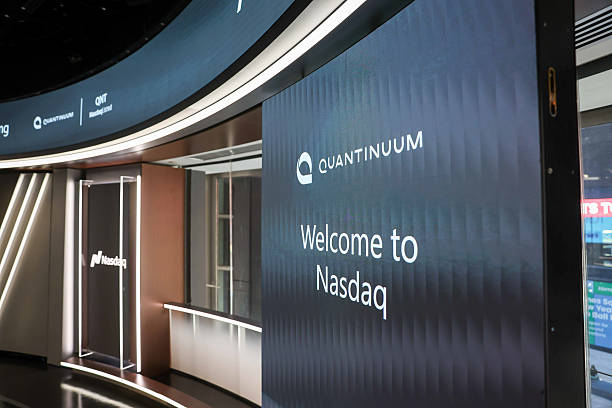
Quantinuum, the Honeywell-backed quantum computing company, recently closed its initial public offering (IPO), raising $1.68 billion after pricing 28 million shares at $60 each, above its original $45 to $50 target range, and debuting on the Nasdaq under the ticker QNT at a market capitalization of approximately $17.6 billion.
The listing would mark the world’s first traditional initial public offering for a full-stack quantum company and the largest public debut in the sector’s history.
The Company Behind the Offering
Quantinuum was formed in 2021 following the combination of Honeywell’s quantum computing business with Cambridge Quantum, a UK-based quantum software firm. The deal brought together Honeywell’s trapped-ion hardware systems and Cambridge Quantum’s quantum software and algorithms work into a single company.
Quantinuum is led by Chief Executive Rajeeb Hazra, a former Intel executive, while Honeywell Chairman and CEO Vimal Kapur serves as chairman. Founder Ilyas Khan is the largest individual shareholder, with a personal stake worth over $2 billion at the initial offering price.
The company is headquartered in Broomfield, Colorado, and positions itself as an end-to-end provider covering both the hardware and software layers of quantum computing, with a customer base that spans pharmaceuticals, materials science, financial services, government, and industrials, including JPMorgan Chase and Amgen among its named clients.
How the Technology Works
Quantinuum’s core approach relies on trapped-ion quantum computing. The company uses individual charged atoms, specifically barium-137 ions, suspended in electromagnetic fields as qubits. The ions are physically shuttled between specialized zones on a microfabricated chip, with storage zones keeping idle qubits isolated and processing zones bringing pairs of ions together for gate operations.
This architecture, called QCCD (Quantum Charge-Coupled Device), moves trapped-ion qubits between different zones for storage, computation, and measurement, enabling scalability and parallel operations. The company’s Helios system reported an average two-qubit gate fidelity of 99.921% as of December 31, 2025.
Beyond hardware, Quantinuum also develops software tools for quantum developers. Its TKET platform is an open-source quantum compiler and software development kit that helps quantum programmers build, optimize, and execute quantum circuits across a wide range of quantum hardware.
The Numbers Investors Are Looking At
Quantinuum reported a net loss of $192.6 million on revenue of $30.9 million in 2025, compared with a net loss of $144.1 million on revenue of $23 million a year earlier. At the midpoint of the initial IPO price range, that translates to a revenue multiple exceeding 400 times, placing the offering firmly in the category of long-duration technology bets rather than near-term earnings stories.
The company’s revenue model currently includes cloud-based access to its trapped-ion quantum hardware, quantum software and middleware licensing, and research collaboration agreements with corporate and government partners.
The timing of the IPO also arrived just days after the Trump administration said it would take $2 billion in equity stakes across nine quantum-computing companies in a push to secure U.S. leadership in the emerging technology, including a $100 million grant earmarked for Quantinuum.
Where Quantum Sits in the Broader Market
D-Wave Quantum surged more than 200% in 2025, and the broader quantum computing market is being projected to grow from roughly $1.9 billion in 2025 to between $20 billion and $45 billion by the end of the decade. Quantinuum’s valuation, at IPO pricing, would make it the second-most valuable publicly traded quantum company behind IonQ, which carries a market value of roughly $21 billion. Like Quantinuum, IonQ also focuses on the trapped-ion approach to quantum computing.
The question the public offering ultimately raises is whether investor appetite for quantum exposure reflects a worthy bet on future enterprise value or simply the momentum of a sector whose full commercial potential remains years away. Either way, quantum computing now has a meaningful public market presence, and Quantinuum is at the center of that shift.


