






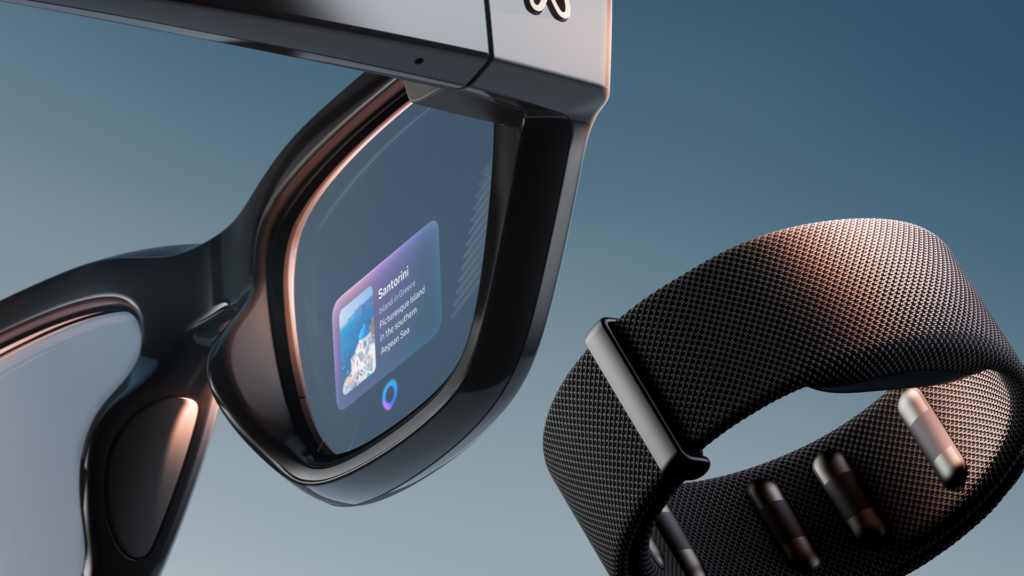
Ambient intelligence is Meta’s new strategy to move AI away from screen-based interaction. A lot of people still access AI through apps that require typing and waiting for responses. However, Meta has developed a system where AI responds within everyday environments instead.
This innovation started with basic limitations in current computing. Users must stop ongoing activity to interact with AI tools. As a result, Meta explored a solution where AI stays present and responds in context without interrupting tasks.
Ambient Intelligence and Multimodal AI Enable Environmental Awareness
To support this shift, AI must understand more than text input. Earlier systems processed images, speech, and data separately which limited contextual understanding. In contrast, multimodal AI combines these inputs into one system.
As a result, AI can interpret what users see and hear in real time. It also connects those signals to immediate situations instead of isolated prompts. This ability forms the foundation for context aware interaction.
Wearables Replace Phones as Context Aware AI Platforms
Even with strong contextual understanding, phones still limit continuous interaction. Users must unlock screens, open apps and shift attention away from tasks. Therefore, Meta shifts focus toward wearable devices that stay active throughout the day.
Reports highlight Meta’s expansion into smart glasses and other wearable concepts. These devices allow AI to remain accessible without requiring deliberate phone use. In addition, they support continuous interaction in natural environments.
Smart Glasses Introduce Early Implementation In Wearable Systems
Meta’s Ray Ban smart glasses are the first practical step in this direction. Users can take photos, ask questions, and receive AI responses without a screen. This enables a more natural interaction flow compared to phone based use.
However, current devices are still in the early implementation stage. They handle basic tasks but do not fully integrate continuous environmental understanding.
Also, reports suggest Meta will continue developing multiple smart glasses models and other wearable devices, including AI pendants.
Wearables Reduce Reliance on Visual Interfaces
As wearables expand, interaction gradually shifts away from screens. Users no longer depend on visual menus or app navigation for simple actions. Instead, they rely more on voice and audio based responses.
This reduces the need to constantly check devices during daily activity. AI delivers information directly within ongoing tasks and interactions become smoother and less disruptive.
Privacy Exposure Increases With Continuous Sensing
However, continuous interaction requires constant environmental awareness. Wearable AI must process what users see and hear to function effectively. This creates a new layer of persistent data collection.
Consequently, concerns grow around privacy, data storage and interpretation of personal surroundings.There’s also increased scrutiny of how smart glasses handle sensitive visual and audio input.
Ultimately, adoption depends on whether users accept continuous sensing in exchange for convenience. Without that trust, ambient intelligence cannot scale widely in consumer markets.


