






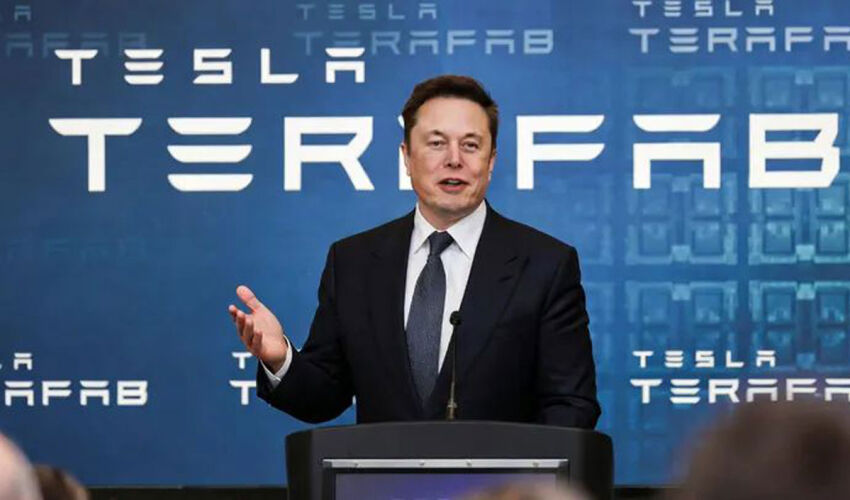
Elon Musk has announced Project Terafab, a $20 billion effort to change how AI chips are built. The project brings together Tesla, xAI, and SpaceX. These companies plan to create powerful chips for artificial intelligence, robotics, and space computing.
More importantly, Musk wants to reduce dependence on Nvidia, which dominates the AI chip market today.
What Is Project Terafab?
Project Terafab is a large semiconductor factory planned for Austin, Texas. Unlike traditional chip manufacturing, this facility will handle the entire process in one place.
Engineers will design chips, manufacture them, package them, and test them within the same complex. Because of this approach, Musk hopes to speed up development and avoid supply delays.
In addition, Musk also says the factory could produce up to one terawatt of computing power each year. This output would exceed what many companies currently produce. For a start, the chips will power Tesla’s self-driving systems, Optimus humanoid robots, and AI data centers. Over time, the project may also support space-based computing for SpaceX missions.
The $20B Investment
To bring his vision to life, Musk plans to invest more than $20 billion in Project Terafab. The funding will cover construction, advanced equipment and hiring experienced engineers.
Semiconductor manufacturing requires specialized tools, which makes projects like this extremely expensive.
However, the investment reflects Musk’s long-term strategy. By controlling chip production, his companies could develop AI systems faster and reduce supply uncertainty.
Implications for Nvidia and the AI Market
Currently, Nvidia dominates the AI chip industry with many AI systems relying on its hardware.
However, Project Terafab could introduce a new source of high performance chips to the market. The project could potentially change the way companies access AI computing power over time.
But, building a semiconductor factory takes a lot of time so production may take years to grow. Even so, if Project Terafab succeeds, it would reduce the reliance on the existing suppliers and create competition in the AI chip market.
Risks and Challenges
Despite its potential, Project Terafab faces major challenges. Semiconductor manufacturing requires skilled engineers and complex equipment. Delays in construction or development could slow progress.
Industry experts also note that new chip factories often struggle to reach full production. Because of this, Musk must overcome significant technical and operational hurdles.
Strategic Significance of Project Terafab
If Project Terafab succeeds, it could reshape how AI hardware is developed. Tesla and SpaceX would gain greater control over computing resources while expanding advanced technologies.
Ultimately, Project Terafab represents a bold effort to build large-scale AI infrastructure. By creating his own chip ecosystem, Musk aims to support future innovations and expand AI capabilities.


