


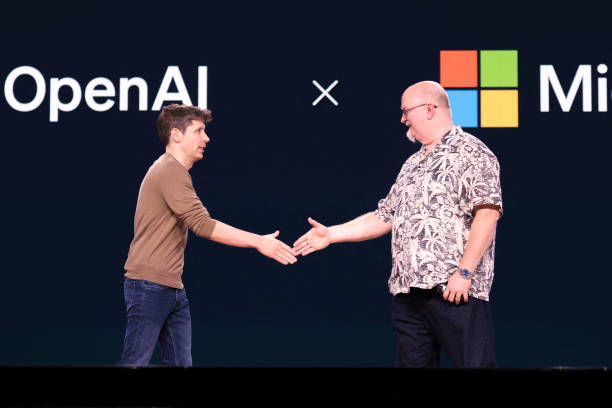
OpenAI and Microsoft are publicly doubling down on their alliance, even as OpenAI signs some of the largest AI deals in the industry with other tech giants.
A new joint statement from both companies maintains that their core partnership, licensing terms, and Azure cloud commitments remain unchanged despite fresh multibillion‑dollar arrangements with Amazon, Nvidia, SoftBank and others.
OpenAI and Microsoft described their collaboration as “strong and central,” emphasizing that they continue to work closely across research, engineering and product development.
Microsoft confirmed it still holds an exclusive license to OpenAI’s models and products for wide commercial use, preserving a key pillar of the relationship first expanded in 2023. And Azure also remains the underlying cloud for OpenAI’s workloads, which further extends Microsoft’s position as the company’s primary infrastructure provider.
The partners pointed back to their October 2025 update, which kept OpenAI as Microsoft’s “frontier model partner” while giving OpenAI more room to work with others. That agreement allowed OpenAI to jointly develop products with third parties, but without altering or reducing Microsoft’s access to its most advanced systems.
OpenAI Mega Deals With New Partners
OpenAI disclosed roughly 110 billion dollars in new funding and partnerships from Amazon, Nvidia and SoftBank, alongside a massive Oracle cloud agreement.
The scale of those deals raised questions about whether Microsoft was being displaced as OpenAI’s primary technology partner. At the same time, OpenAI deepened ties with Apple, bringing ChatGPT into iOS, iPadOS and macOS as part of the Apple Intelligence rollout.
Microsoft and OpenAI now say these moves were always anticipated in their contracts, as the joint statement notes that collaborations such as the OpenAI-Amazon arrangement fit within the framework agreed in 2025.
Microsoft Azure Still Behind the Scenes
Both companies state that any “stateless” API calls to OpenAI models generated through third‑party collaborations, including Amazon, will be hosted on Microsoft Azure. That means enterprises using OpenAI models through other vendors may still be relying on Microsoft’s cloud, even if Microsoft is not the direct vendor of record.
Microsoft also stresses that its intellectual property relationship with OpenAI is unchanged, and that it retains exclusive rights to deploy OpenAI models at scale across its own products and services.
A Shift to Multi‑Vendor AI Partnership Without Breaking Ties
The broader enterprise AI market is already moving toward multi‑vendor setups, where companies blend models from OpenAI, Anthropic, and others across several clouds. Microsoft itself has embraced that trend by adding rival models like Anthropic’s Claude to its Azure AI offering, even while keeping OpenAI at the center of its frontier model roadmap.
OpenAI’s new partnerships with Apple, Amazon and large infrastructure providers also fit into that multi‑vendor reality, but the latest statements specifically underline that they do not dissolve its foundational pact with Microsoft.
For now, the message from both sides is that OpenAI can go big with new backers, while Microsoft still powers, licenses and co‑develops much of what happens underneath.
“We remain committed to our partnership and to the shared mission that brought us together,” both companies affirmed. “We continue to work side‑by‑side to deliver powerful AI tools, advance responsible development, and ensure that AI benefits people and organizations everywhere.”
This update comes after recent rumors touting Microsoft dumping OpenAI to focus on self-sufficiency.
