






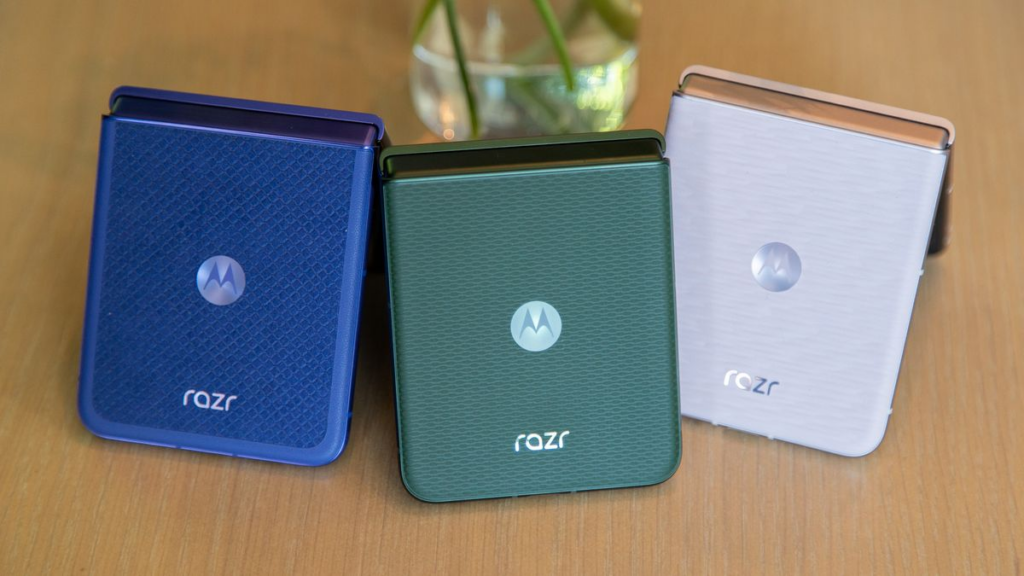
Motorola’s foldable phones used to be an accessory. A lot of users liked them but kept their regular smartphones.
However, Motorola is changing that perception with the Motorola Razr 2026 lineup. As a result, foldable phones are becoming practical everyday devices.
Foldable Phones Durability Is Improving
At first, durability concerns limited adoption. Many users worried about weak hinges and fragile screens. Because of this, foldable phones were considered unreliable for daily use.
However, manufacturers have now reinforced key components from the base model to the Ultra model. The Razr 2026 includes a stronger hinge design, Gorilla Glass protection, and IP48 resistance.
These upgrades protect against dust and water. As a result, users can handle the device without constant caution and removes a major barrier to adoption.
The New Cover Display Improves Daily Usability
With durability sorted, usability becomes the next priority. Early foldable phones required frequent unfolding for simple tasks. That design reduced convenience during everyday use.
To combat this minor hiccup, The Razr 2026 lineup features a 3.6-inch outer display that supports apps and quick actions. Users can reply to messages, control media, and check notifications instantly.
Therefore, the device reduces unnecessary steps. This improvement makes the folding design more efficient.
Improved Performance and Battery Life
Moreover, better usability increases reliance so device performance must remain consistent. Earlier foldable phones struggled with speed and battery life. Because of this, users preferred traditional smartphones.
Across the lineup, Motorola scales performance by tier. The base model uses a Dimensity 7450X chip with 8GB RAM for everyday tasks. The Plus adds a Snapdragon 8s Gen 3 with 12GB RAM, while the Ultra uses a Snapdragon 8 Elite with up to 16GB RAM.
Battery capacity also improves, ranging from about 4,500mAh to 5,000mAh. As a result, users get reliable performance at every tier.
Display and Camera Upgrades Close the Gap
The Razr 2026 lineup features a 6.9-inch AMOLED display with a 120Hz refresh rate. It also includes dual 50MP rear cameras and a 32MP front camera.
As a result, users get flagship-level visuals and photography and zero compromises on quality.
Foldable Phones are Going Mainstream
In conclusion, foldable phones no longer depend on novelty to justify their value. The Motorola Razr 2026 lineup shows this through clear hardware improvements. It delivers durability, consistent performance, and practical usability in one device.
Overall, these improvements remove the trade-offs that once limited adoption. As a result, users can now choose a foldable phone with the same expectations as a regular smartphone.


