






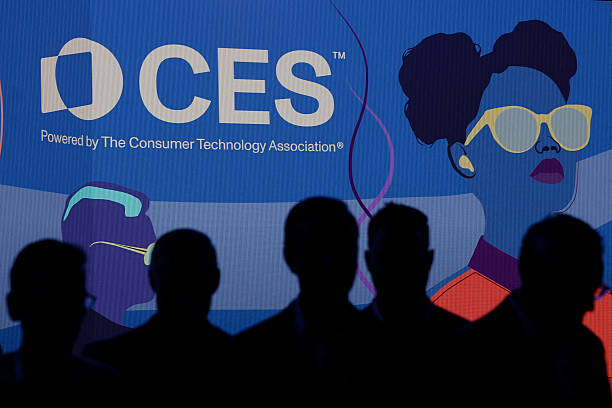
CES 2026 recently wrapped up in Las Vegas with a major highlight on next-generation AI and robotics innovations across consumer, industrial, and mobility sectors. The event featured over 4,100 exhibitors and had over 148,000 people in attendance.
The Consumer Electronics Show always sets the tone for tech’s next chapter and this year’s event showcased companies’ renewed focus on integration with AI that extends beyond prototypes into factories, homes, cars, and hospitals.
AI Powers Smarter Hardware
Nvidia announced the Rubin architecture, a next-gen GPU system designed as an upgrade to the former Blackwell architecture and for massive AI training and inference, alongside Alpamayo, a reasoning model tailored for autonomous driving.
Then AMD countered with the MI440X GPU and the Ryzen AI 400 Series, which targets everything from laptops to data centers for on-device processing.
Samsung, a leading electronics maker, also brought AI companions to life in its First Look event, as it showcased how it embedded multimodal models into appliances for proactive assistance. An example is Samsung refrigerators suggesting meals based on inventory and health data.
And in healthcare AI, Withings, a company known for innovative designs in connected devices, launched the Body Scan 2 scale with AI-driven biomarker analysis that allows it to detect early signs of conditions like atrial fibrillation with simple weigh-ins. These innovations will make advanced diagnostics available and accessible, with a potential of reducing hospital visits by empowering users at home.
Humanoid Robotics Enter the Workforce
Boston Dynamics introduced the production-ready version of its electric Atlas humanoid robot, and the machine met industry standards. With 56 degrees of freedom, a 7.5-foot reach, and the ability to lift 110 pounds, Atlas demonstrated capabilities that go well beyond what most people expect from robots.
During the keynote at CES, it rose from a flat position using an unconventional joint-flipping maneuver that showcased its full rotational freedom before interacting with the audience.
Boston Dynamics also announced a partnership with Google DeepMind to integrate Gemini Robotics AI, which will allow Atlas to reason through complex instructions and navigate unstructured environments.
Retail and Everyday AI Integration
The shopping experience also promises to change with AI driving much of that transformation.
For instance, VenHub’s fully autonomous 24-hour Smart Stores combine robotics, automation, and mobile-first checkout, eliminating the need for human staff entirely. GE Appliances’ smart refrigerator features a barcode scanner that syncs with Instacart and one that automatically suggests reorders when users are running low on groceries.
“The shopping journey has fundamentally changed,” said Nili Klenoff, executive vice president at Mastercard, highlighting the growth of commerce media and more autonomous shopping experiences driven by AI.
“The lines between awareness, engagement and conversion are especially blurry now as agentic makes its impact on commerce,” Klenoff asserted. “But commerce media sharpens the journey, delivering relevance, influence and action we can actually measure.”
Additionally, Google revealed how it’s bringing Gemini 3 to its Google TV operating system, allowing users to search for content using natural language and edit and save images for TV screensavers.
The Trust Problem No One’s Solved Yet
For all the technological advancement, especially when it comes to AI, one fundamental challenge remains, which is getting people to trust robots operating in their spaces and the subtle invasion of AI into the everyday lives of the everyday people.
At CES 2026, Mikkel Taylor, Director of Robotics strategy at General Motors highlighted a story about a Zoox robotaxi that recently stopped working at a Las Vegas crosswalk and wouldn’t budge, which left pedestrians confused about what to do.
Carolina Parada of Google DeepMind also emphasized that building trust when it comes to the development of AI and robots requires the need for these products to be “transparent in their thinking and transparent in their motions, so people know what to expect.”
As such, if robots are going to work alongside humans in factories, deliver packages to doorsteps, or assist in medical surgeries, people need to truly understand what they’re doing and why as technical capability alone won’t qualify.
What CES 2026 Predicts for the Future of AI
At CES 2026, AMD CEO Lisa Su called AI “the most important technology of the last 50 years,” making a note of how the technology is “for everyone,” and how it will continue “to be everywhere over the next few years,” transforming critical industries like healthcare, manufacturing and commerce.
The evidence at CES 2026 backs this claim up. AI and robotics are no longer confined to specialized applications or research labs as they’re now becoming deeply integrated across consumer products, industrial operations, healthcare delivery, and everyday experiences.
More importantly, the show demonstrated that physical AI has moved from controlled applications or demonstrations to mass commercial deployment, with manufactures, healthcare providers, and retailers actively implementing these technologies to solve real operational challenges.
However, what remains to be seen is whether this tech can earn the trust needed to operate seamlessly in human environments and especially if the infrastructure can scale fast enough to meet demand. CES 2026 showed that the industry is betting heavily on both.


