






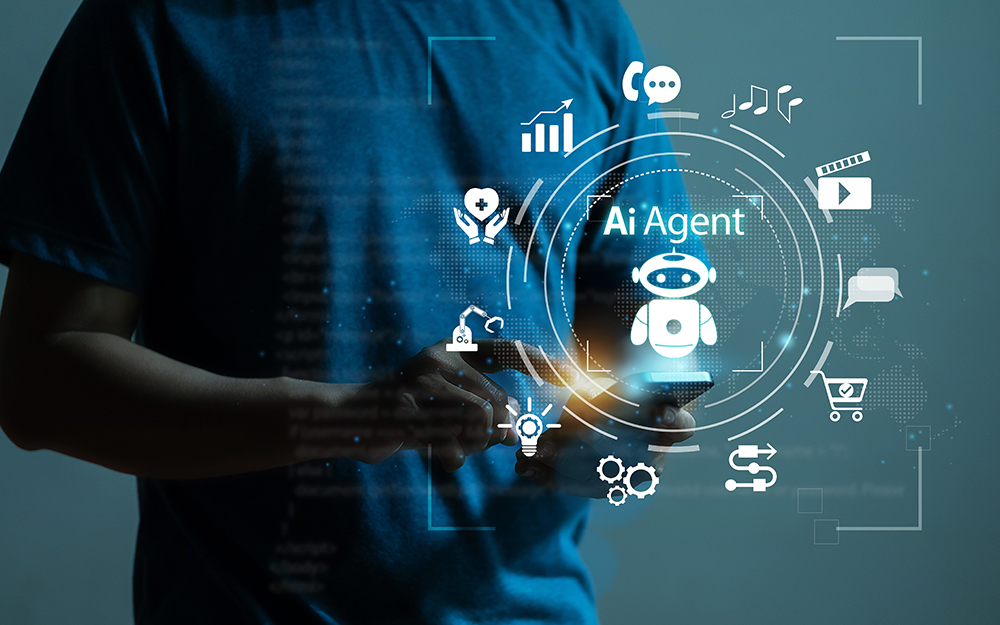
Your friendly “AI copilot” is quietly losing its seat because enterprises now want software that actually does the work once a goal is set. In 2026, that means a move away from reactive copilots that wait for prompts toward autonomous AI agents that can plan multi-step tasks, talk to other systems, and keep going until something is finished or needs escalation.
Research shows that more than 80% of businesses now plan to integrate agents into their AI strategy within the next year, with predictions indicating that 40% of enterprise applications will incorporate task-specific AI agents by the end of 2026. This replacement represents a transition from reactive assistance to autonomous execution.
On the one hand, AI copilots emerged as collaborative tools designed to work alongside humans, offering real-time suggestions and insights to enhance productivity. These systems respond to prompts, retrieve information, and help users make faster decisions. However, they always wait for users to tell them what to do next.
On the other hand, AI agents are proactive, autonomous, and goal-oriented, capable of reasoning, planning, and using tools like software and APIs to work toward objectives with minimal human oversight. Give an agent a complex, multi-step goal, and it will figure out how to complete it by breaking down the task, using the necessary tools, and adapting as conditions change. The core distinction between AI copilot and AI agents strictly lies in how they operate.
The Real-World Deployment of AI Agent
The transformation is already visible across sectors. Major companies across many industries have introduced agents that plan and act inside real applications with proper permissions. In financial and human resources services, for example, organizations are embedding native AI agents directly into cloud ERP platforms to power operations and provide predictive insights.
Healthcare organizations are also deploying agents for patient management, chronic care management, and medication adherence reminders. These are high-volume, low-risk workflows that scale preventive health at lower cost.
Even software development is being reshaped. Autonomous coding agents now move beyond simple code completion to full task automation, taking natural language goals, generating code, writing and running tests, and autonomously debugging to achieve objectives.
However, this autonomy introduces new challenges. A 2025 Gartner survey reveals that 74% of IT leaders believe these agents represent a new attack vector, and only 13% strongly agree they have the right governance structures to manage them.
To solve this, enterprises are introducing human-in-the-loop controls that allow organizations to require human review or approval at specific stages of an agent’s execution.
What This Replacement Means
While AI agents are now technically replacing AI copilots, it is still about restructuring how work gets done for many organizations, with humans setting direction and AI agents carrying out the work. This requires rethinking workflows, redefining roles, and establishing new patterns of human-AI collaboration.


