

Close Menu

    Stay Ahead with Exclusive Updates!

    Enter your email below and be the first to know what’s happening in the ever-evolving world of technology!

    What's Hot

    Market Collapse: What Happened to NFTs?

    April 23, 2026

    Google’s Talks with Marvell Show the TPU Race is Not Slowing Down. It is Moving Deeper into Custom Silicon

    April 22, 2026

    What OpenAI’s $20 Billion Cerebras Deal Says About the New Politics of AI Compute and Capital Flow

    April 21, 2026
    Facebook X (Twitter) Instagram
    Facebook X (Twitter)
    PhronewsPhronews
    • Home
    • Big Tech & Startups

      Google’s Talks with Marvell Show the TPU Race is Not Slowing Down. It is Moving Deeper into Custom Silicon

      April 22, 2026

      What OpenAI’s $20 Billion Cerebras Deal Says About the New Politics of AI Compute and Capital Flow

      April 21, 2026

      Antitrust War: OpenAI Asks the State to Probe Elon Musk’s “Anti-Competitive” X

      April 19, 2026

      Token Efficiency: Why Aria Networks Raised $125M for AI-Native Infrastructure

      April 18, 2026

      Virtual Safeguards: China Bans Addictive “Digital Humans” for Minors

      April 18, 2026
    • Crypto

      Market Collapse: What Happened to NFTs?

      April 23, 2026

      Quantum Computing Advances Force Coinbase and Institutional Custodians to Rethink Crypto Security

      March 8, 2026

      AI Assisted Hacking Groups Target Crypto Firms With Multi-Layered Social Engineering

      February 18, 2026

      Global Crypto Regulations Expand as 2026 Begins With New Data Collection Frameworks and National Laws

      January 16, 2026

      Coinbase Bets on Stablecoin and On-Chain Growth as Key Market Drivers in 2026 Strategy

      January 10, 2026
    • Gadgets & Smart Tech
      Featured

      The Crease Problem: Why Apple’s Foldable iPhone Won’t Release Until 2027

      By preciousApril 21, 2026
      Recent

      The Crease Problem: Why Apple’s Foldable iPhone Won’t Release Until 2027

      April 21, 2026

      AirPods Max 2: USB-C, Live Translation, and the H2 Upgrade

      March 26, 2026

      How ABB and Nvidia are Perfecting Industrial Robotics using AI Simulation

      March 20, 2026
    • Cybersecurity & Online Safety

      Cyber Retaliation: How Iran-Linked Hackers Paralyzed Medical Giant Stryker

      April 16, 2026

      Your Company Could Be Iran’s Next Target: What U.S. Tech Firms Need to Do Right Now

      April 6, 2026

      Google Is Warning Us About The Encryption Protecting Your Data Today. It May Not Survive Quantum Computing

      April 5, 2026

      Accenture and Anthropic Team Up on AI-powered Cybersecurity

      April 4, 2026

      Your BVN, Passport, and Bank Account May Already Be on the Dark Web. What Every Nigerian Must Do Right Now After the Banking Breaches

      April 4, 2026
    PhronewsPhronews
    Home»Crypto, Blockchain & Web3»Market Collapse: What Happened to NFTs?
    Crypto, Blockchain & Web3

    Market Collapse: What Happened to NFTs?

    preciousBy preciousApril 23, 2026No Comments
    Facebook Twitter Pinterest LinkedIn WhatsApp Reddit Tumblr Email
    Share
    Facebook Twitter LinkedIn Pinterest Email
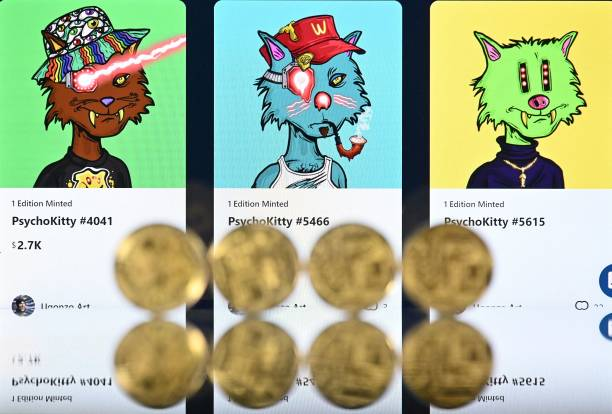
    Photo Credit: Justin Tallis/AFP via Getty Images

    In March 2021, a digital artwork by the artist Beeple sold at Christie’s for $69.3 million, making him one of the three most valuable living artists at auction. The work was a JPEG. There was no physical canvas, no sculpture, no object a buyer could hang on a wall. What the winning bidder paid for was a blockchain record confirming they owned the file. That sale became the moment NFTs broke into mainstream conversation, and for about a year, the market that followed it seemed unstoppable. 

    Then it fell apart.

    What NFTs Actually Were

    An NFT, short for non-fungible token, is a unique digital certificate stored on a blockchain that records ownership of a specific item, usually a piece of digital art, a collectible, or a video clip. The idea was that unlike regular digital files, which anyone can copy, an NFT gave the owner a verified claim to the original. Think of it like a title deed for a house, except the house is a digital file that anyone can photograph and walk away with. The deed proves you own the original, but the original offers no exclusive access, no physical experience, and in most cases, no practical benefit. 

    This concept attracted artists, investors, and speculators in large numbers between 2020 and 2022. At the peak in 2021, over 529,000 active traders were already participating in the art NFT market alone, with total trading volume reaching $2.9 billion. Celebrities bought into collections. Major brands launched their own tokens. Auction houses treated NFT drops like gallery openings. However, there was a big problem. 

    How the Collapse Happened

    The market’s biggest problem was that it grew faster than it had any reason to. By 2025, there were 1.34 billion NFTs in circulation, a 3,400% increase from the 38 million available in 2021, while total sales revenue continued to fall. What this meant was that supply flooded the market at the same time buyers lost interest. 

    Then came the proliferation of cheaper minting tools, which meant anyone could create and list an NFT within minutes. This also meant thousands of projects were launched with little to offer buyers beyond the hope that prices would keep rising. One can liken this scenario to a property market where developers keep building houses in a town people are already leaving. 

    Additionally, scams and failed projects damaged trust broadly. Developers who collected money from buyers and then abandoned their projects, a practice known as a “rug pull,” became common enough that they left lasting doubt and fear across the NFT space. High transaction fees on the Ethereum network also made it expensive for casual buyers to participate, which eventually priced out the very audience the market needed to sustain itself.

    Then in 2025, the average sale price per NFT fell from around $400 during the boom years to just $96. Most collections that once had active communities quietly went dormant. And around 96% of NFT collections are now considered inactive, with no trading activity or community engagement remaining.

    The Platforms Shutting Down

    The clearest sign of how far things have fallen is the number of platforms that have closed. MakersPlace, the platform that provided the back-end infrastructure for the $69.3 million Beeple sale, shut down in 2025, citing “ongoing market challenges and funding difficulties.” KnownOrigin shut down in July 2024, and Async Art closed back in October 2023.

    Kraken NFT, X2Y2, Bybit NFT, and LG Art Lab all ceased operations across 2025. Nike ended the Web3 operations of its RTFKT brand in January of the same year. Christie’s, which had hosted that landmark Beeple sale, shut down its entire digital art department in September 2025 after none of its 11 auctions that year exceeded $400,000 in sales.

    Nifty Gateway, which at its peak processed over $300 million in sales in a single month and hosted drops from artists including Beeple and Grimes, announced its closure in January 2026, giving users until April 2026 to withdraw their assets from the platform.

    What Is Left of NFTs

    While the NFT market has not entirely disappeared, what remains looks very different from the boom years. Gaming NFTs, where tokens represent usable in-game items rather than purely collectible images, have held up better than most categories. They accounted for 38% of all NFT transaction volumes in 2025. Platforms linking physical collectibles like trading cards to blockchain records have also found a smaller but more stable audience.

    The collections that still hold any value tend to be the earliest and most historically significant ones, like CryptoPunks, or those tied to something tangible. The rest of the market, the thousands of profile picture projects and one-off drops that launched during the 2021 frenzy, has largely been forgotten or abandoned. 

    NFT will perhaps remain a technology with a genuinely interesting concept that attracted big money, produced very little real utility for most buyers, and eventually ran out of new people willing to pay rising prices. The market that remains is a fraction of what it was, and the mainstream or “boom” era is almost certainly not coming back.

    Beeple Christie's Auction history CryptoPunks long-term value Digital Art market collapse NFT boom NFT market crash 2026 NFTs decline What happened to NFTs
    Share. Facebook Twitter Pinterest LinkedIn Tumblr Telegram Email
    precious
    • LinkedIn

    I’m Precious Amusat, Phronews’ Content Writer. I conduct in-depth research and write on the latest developments in the tech industry, including trends in big tech, startups, cybersecurity, artificial intelligence and their global impacts. When I’m off the clock, you’ll find me cheering on women’s footy, curled up with a romance novel, or binge-watching crime thrillers.

    Related Posts

    Quantum Computing Advances Force Coinbase and Institutional Custodians to Rethink Crypto Security

    March 8, 2026

    AI Assisted Hacking Groups Target Crypto Firms With Multi-Layered Social Engineering

    February 18, 2026

    Global Crypto Regulations Expand as 2026 Begins With New Data Collection Frameworks and National Laws

    January 16, 2026

    Comments are closed.

    Top Posts

    Coinbase responds to hack: customer impact and official statement

    May 22, 2025

    MIT Study Reveals ChatGPT Impairs Brain Activity & Thinking

    June 29, 2025

    From Ally to Adversary: What Elon Musk’s Feud with Trump Means for the EV Industry

    June 6, 2025

    Anthropic Will Use Claude User Chats For Data Training

    October 16, 2025
    Don't Miss
    Crypto, Blockchain & Web3

    Market Collapse: What Happened to NFTs?

    By preciousApril 23, 2026

    In March 2021, a digital artwork by the artist Beeple sold at Christie’s for $69.3…

    Google’s Talks with Marvell Show the TPU Race is Not Slowing Down. It is Moving Deeper into Custom Silicon

    April 22, 2026

    What OpenAI’s $20 Billion Cerebras Deal Says About the New Politics of AI Compute and Capital Flow

    April 21, 2026

    The Crease Problem: Why Apple’s Foldable iPhone Won’t Release Until 2027

    April 21, 2026
    Stay In Touch
    • Facebook
    • Twitter
    About Us
    About Us

    Evolving from Phronesis News, Phronews brings deep insight and smart analysis to the world of technology. Stay informed, stay ahead, and navigate tech with wisdom.
    We're accepting new partnerships right now.

    Email Us: info@phronews.com

    Facebook X (Twitter) Pinterest YouTube
    Our Picks
    Most Popular

    Coinbase responds to hack: customer impact and official statement

    May 22, 2025

    MIT Study Reveals ChatGPT Impairs Brain Activity & Thinking

    June 29, 2025

    From Ally to Adversary: What Elon Musk’s Feud with Trump Means for the EV Industry

    June 6, 2025
    © 2025. Phronews.
    • Home
    • About Us
    • Get In Touch
    • Privacy Policy
    • Terms and Conditions

    Type above and press Enter to search. Press Esc to cancel.