

Close Menu

    Stay Ahead with Exclusive Updates!

    Enter your email below and be the first to know what’s happening in the ever-evolving world of technology!

    What's Hot

    Google TPU Chips Threatens Nvidia’s GPU Dominance

    January 13, 2026

    Cybersecurity Funding Increases as AI-Driven Threats Become More Sophisticated 

    January 12, 2026

    Coinbase Bets on Stablecoin and On-Chain Growth as Key Market Drivers in 2026 Strategy

    January 10, 2026
    Facebook X (Twitter) Instagram
    Facebook X (Twitter)
    PhronewsPhronews
    • Home
    • Big Tech & Startups

      Google TPU Chips Threatens Nvidia’s GPU Dominance

      January 13, 2026

      Nvidia in Talks to Acquire AI21 Labs in $3B Generative AI Deal

      January 8, 2026

      Google Centralizes AI Development Around Gemini as Partners Prepare AI Vision Launch at CES 2026

      January 8, 2026

      Nvidia Aims to Begin H200 Chip Shipments to China by Mid-February

      January 7, 2026

      Cisco in Advanced Talks to Acquire Cybersecurity Startup Axonius for $2 billion

      January 7, 2026
    • Crypto

      Coinbase Bets on Stablecoin and On-Chain Growth as Key Market Drivers in 2026 Strategy

      January 10, 2026

      Tether Faces Ongoing Transparency Questions and Reserve Scrutiny Amid Massive Bitcoin Accumulation

      January 5, 2026

      Kanye West YZY Coin Crash Follows $3B Hype Launch

      August 24, 2025

      Crypto Markets Rally as GENIUS Act Nears Stablecoin Regulation Breakthrough

      July 23, 2025

      Lightchain and Ethereum Spark AI Chain Revolution

      July 23, 2025
    • Gadgets & Smart Tech
      Featured

      Meta Poaches Apple Design Exec Alan Dye to Lead a New Creative Studio

      By preciousDecember 11, 202526
      Recent

      Meta Poaches Apple Design Exec Alan Dye to Lead a New Creative Studio

      December 11, 2025

      Samsung Teases DX Vision and New AI Experiences Ahead of CES 2026

      December 10, 2025

      Why Amazon’s New AI Glasses Are Changing Delivery

      November 10, 2025
    • Cybersecurity & Online Safety

      Cybersecurity Funding Increases as AI-Driven Threats Become More Sophisticated 

      January 12, 2026

      Cisco in Advanced Talks to Acquire Cybersecurity Startup Axonius for $2 billion

      January 7, 2026

      Microsoft Pushes Zero-Trust as the Enterprise Default in 2026 Security Roadmap

      January 3, 2026

      Google Cloud expands Security Services Partnership with Palo Alto Networks in a $10B deal

      December 29, 2025

      Google issues emergency Pixel update after reports of spyware attacks

      December 24, 2025
    PhronewsPhronews
    Home»Big Tech & Startups»China’s Zuchongzhi-3 Raises the Stakes in the Global Quantum Computing Race
    Big Tech & Startups

    China’s Zuchongzhi-3 Raises the Stakes in the Global Quantum Computing Race

    preciousBy preciousApril 26, 2025Updated:May 3, 2025No Comments13 Views
    Facebook Twitter Pinterest LinkedIn WhatsApp Reddit Tumblr Email
    Share
    Facebook Twitter LinkedIn Pinterest Email

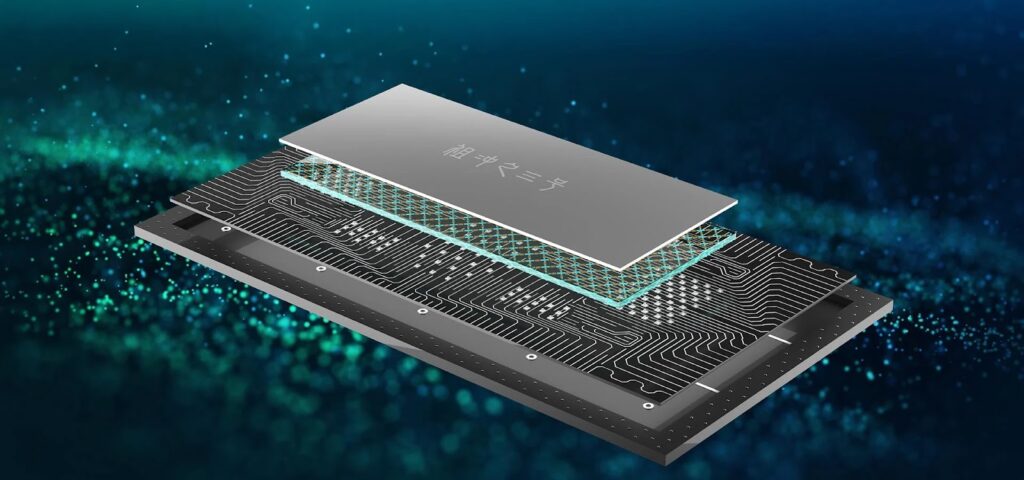
    The constantly changing nature of Quantum Computing has allowed for another breakthrough with the unveiling of China’s Zuchongzhi-3 Superconducting Quantum Computer, signifying a milestone and placing China at the forefront of the ever-evolving global quantum race.

    Developed by The University of Science and Technology of China (USTC), the Superconducting chip Zuchongzhi-3 is said to be 1 quadrillion times faster than the world’s most powerful and fastest classical supercomputers, Frontier. It directly competes with America’s Tech Giants’ contributions to Quantum Computing in the names of Google’s Willow Chip, Microsoft’s Majorana 1 Chip, IBM 1,121 condor processor, and Amazon’s Ocelot.

    China’s Quantum Leap: The Zuchongzhi-3 Unveiling

    China’s Zuchongzhi-3, a 105-qubit superconducting quantum processor, is claimed by its researchers to be 1015 faster than the world’s most advanced classical supercomputers. Being a successor to Zuchongzhi-2, it represents a significant upgrade where it features 105 qubits arranged in a 15×7 array with 182 couplers to enhance quantum connectivity. 

    The researchers explain in their published paper that the unveiling of this superconductor highlights a significant leap in quantum computing. They executed a larger scale random circuit sampling which is reportedly better than Google’s Sycamore, a 54-qubit quantum processor developed by Google AI Quantum, with Zuchongzhi-3 features being an enhanced coherence time, quantum error correction, and an improved gate fidelity which has been a long-standing challenge in the quantum computing field.

    The superconducting quantum computer prototype delivers exceptional precision, achieving 99.90% for a single-qubit gate fidelity, 99.62% for two-qubit gate fidelity, and a readout accuracy of 99.18%.

    In a striking display of its power, Zuchongzhi-3 completed an 83-qubit, 32-cycle random circuit sampling task, collecting one million samples in mere hundreds of seconds, a feat that would take Frontier, the world’s leading classical supercomputer, an estimated 6.4 billion years to match. 

    China’s Zuchongzhi-3 also outperforms Google’s SYC-67 and SYC-70 experiments by six orders of magnitude, setting an outstanding standard in quantum computing. 

    The Competition: How Zuchongzhi-3 Stacks Up Against American Tech Giants’ Culminating Efforts

    Since quantum computing remains in its experimental phase, the unveiling of China’s Zuchongzhi-3 has contributed immensely to the development of its application to solve real-life challenges. However, this achievement may have intensified the competition between the U.S. and China, seeing as Zuchongzhi-3 is miles ahead in terms of the processor being faster than Google’s Willow, who formerly held the position.

    Below is an analytical table comparing key features and major achievements of the quantum computers we’ve had so far, each contributing to the race towards an eventual real-life application, as well as for commercial use at large.

    ProcessorQubitsTaskTime (Quantum)Estimated Classical Simulation TimeMajor Achievements
    Zuchongzhi-3105Few hundred seconds6.4 billion yearsSix orders of magnitude beyond Google’s SYC-67 and SYC-70 experiments
    Google’s Willow105Under five minutes10 septillion yearsFirst to achieve below threshold quantum error correction
    Google SYC-7070Seconds47 yearsDemonstrated quantum advantage over classical supercomputers 
    Microsoft’s Majorana 1 Chip8N/AN/ATopological qubits for enhanced stability, a path to million-qubit systems
    Amazon’s Ocelot5N/AN/ACat qubits for efficient error correction, up to 90% reduction in costs
    IBM’s Condor1121N/AN/ALargest quantum processor with 1,121 qubits, pushing the limits of scale and yield

    What’s next in the Quantum Race?

    The USTC Researchers are looking forward to engaging in research to further advance quantum error correction, explore quantum entanglement, and scale up their quantum system. They are now tasked with improving processor reliability, testing advanced error correction, and making quantum computers practical for real-world applications.

    For instance, with their implementation of surface codes with distance codes of 9 and 11, they are testing and refining advanced techniques to build fault-tolerant systems. Also, further research and exploration of quantum entanglement and chemistry opens doors to tackling real-world problems such as cracking complex solutions or cryptography that classical computers can’t handle. 

    This could then have an impact on industries such as material discovery, cryptography, and even healthcare, as they are industries that still face huge problems due to the inability of classical computers to solve their unique problems.

    105 qubits China quantum breakthrough Frontier supercomputer gate fidelity Google Willow chip quantum coherence quantum computing quantum error correction quantum race quantum supremacy random circuit sampling superconducting quantum processor University of Science and Technology of China USTC quantum research Zuchongzhi-3
    Share. Facebook Twitter Pinterest LinkedIn Tumblr Telegram Email
    precious
    • LinkedIn

    I’m Precious Amusat, Phronews’ Content Writer. I conduct in-depth research and write on the latest developments in the tech industry, including trends in big tech, startups, cybersecurity, artificial intelligence and their global impacts. When I’m off the clock, you’ll find me cheering on women’s footy, curled up with a romance novel, or binge-watching crime thrillers.

    Related Posts

    Google TPU Chips Threatens Nvidia’s GPU Dominance

    January 13, 2026

    Nvidia in Talks to Acquire AI21 Labs in $3B Generative AI Deal

    January 8, 2026

    Google Centralizes AI Development Around Gemini as Partners Prepare AI Vision Launch at CES 2026

    January 8, 2026

    Comments are closed.

    Top Posts

    MIT Study Reveals ChatGPT Impairs Brain Activity & Thinking

    June 29, 2025131

    From Ally to Adversary: What Elon Musk’s Feud with Trump Means for the EV Industry

    June 6, 202587

    Coinbase Hack 2025: Everything we know so far.

    May 21, 202583

    Coinbase responds to hack: customer impact and official statement

    May 22, 202579
    Don't Miss
    Artificial Intelligence & The Future

    Google TPU Chips Threatens Nvidia’s GPU Dominance

    By preciousJanuary 13, 20263

    Google’s Tensor Processing Units (TPUs) pose a growing challenge to Nvidia’s dominance in AI hardware…

    Cybersecurity Funding Increases as AI-Driven Threats Become More Sophisticated 

    January 12, 2026

    Coinbase Bets on Stablecoin and On-Chain Growth as Key Market Drivers in 2026 Strategy

    January 10, 2026

    Nvidia in Talks to Acquire AI21 Labs in $3B Generative AI Deal

    January 8, 2026
    Stay In Touch
    • Facebook
    • Twitter
    About Us
    About Us

    Evolving from Phronesis News, Phronews brings deep insight and smart analysis to the world of technology. Stay informed, stay ahead, and navigate tech with wisdom.
    We're accepting new partnerships right now.

    Email Us: info@phronews.com

    Facebook X (Twitter) Pinterest YouTube
    Our Picks
    Most Popular

    MIT Study Reveals ChatGPT Impairs Brain Activity & Thinking

    June 29, 2025131

    From Ally to Adversary: What Elon Musk’s Feud with Trump Means for the EV Industry

    June 6, 202587

    Coinbase Hack 2025: Everything we know so far.

    May 21, 202583
    © 2025. Phronews.
    • Home
    • About Us
    • Get In Touch
    • Privacy Policy
    • Terms and Conditions

    Type above and press Enter to search. Press Esc to cancel.