


The possibility of artificial intelligence (AI) replacing human workers has become a growing concern as technology companies develop systems capable of performing tasks previously handled by people. Some industry leaders have even warned that increasingly advanced AI could significantly reduce the number of jobs available to humans.
However, as these companies work towards making their systems more capable, they are also becoming increasingly dependent on human experts to train and improve them.
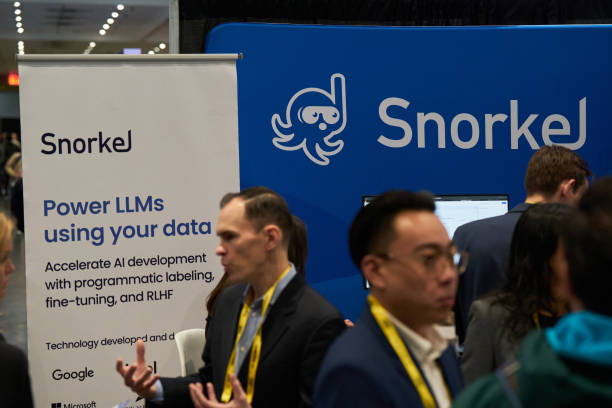
This growing demand has helped Snorkel AI raise $350 million in fresh funding, bringing its valuation to $3.5 billion as AI developers spend heavily on specialised human knowledge. This new valuation is also nearly three times the $1.3 billion Snorkel reached after raising $100 million in May 2025.
The San Francisco-based startup announced the Series E funding round on September 22, with Insight Partners and S32 leading the investment. Existing investors, including Addition, Greylock, and Wells Fargo, also participated.
Why AI Companies Still Need Human Experts
As AI models become more advanced, developers need increasingly difficult training tasks to improve their performance, particularly in areas requiring specialised knowledge and complex reasoning.
This is where companies like Snorkel come in.
Founded in 2019 by researchers from Stanford University’s AI lab, Snorkel works with tens of thousands of specialists in fields such as software engineering, medicine, and law.
These experts develop complex problems, establish what correct answers should look like, and assess how well AI systems perform.
For example, a software engineer might create a difficult coding task that requires several steps to complete, while a medical expert could help develop questions that test an AI model’s understanding of specialised medical information.
Snorkel combines this human expertise with automated AI tools that help generate training data and check its quality.
Speaking to Reuters, Snorkel CEO Alex Ratner said he believes human expertise will remain essential to developing valuable AI training data, even as companies increasingly use automated tools.
“Our strong view is that 100% of the data that labs will get value out of will have some human input in the foreseeable future,” Ratner said.
Snorkel’s Revenue Surges as Demand for Training Data Grows
The increasing need for specialised training data has helped Snorkel expand its business significantly.
The company initially focused on software that helped businesses automate data labelling. However, in September 2025, it introduced a service that supplies customers with completed training datasets and simulated environments for testing AI systems.
Rather than charging customers directly for human labour, Snorkel sells finished data products developed using both human specialists and automated systems.
Snorkel says its annualised revenue run rate has reached $375 million, up roughly eighteenfold from about $20 million a year earlier, driven by its data-as-a-service business. The company also expects to become profitable in 2026.
Snorkel plans to use the new investment to hire more researchers and engineers, expand its work with businesses and government agencies, as well as develop training data for additional industries.
The company is also increasing its support for independent AI model evaluations. On October 7, Snorkel announced that it was expanding its Open Benchmarks Grants programme from $3 million to $30 million to support researchers developing tests that measure the capabilities and performance of advanced AI systems.
Investors Are Pouring Billions Into Human-Powered AI Training
Snorkel’s funding also reflects growing investor interest in companies that provide specialised training data to major AI developers.
In June 2025, Meta invested approximately $14.3 billion in Scale AI for a 49% stake, while other companies, including Mercor and Surge AI, have attracted significant investor interest.
These investments show how important human expertise has become to developing more capable AI systems, particularly as models are trained to perform increasingly complicated tasks.
And this presents an interesting contradiction in the AI industry.
While technology companies continue developing systems that could eventually replace people in certain jobs, they are also investing billions of dollars in the human knowledge needed to make those systems possible.
This shows that even as the industry moves towards greater automation, its progress still depends heavily on the very people whose work AI is being developed to perform.
