


Nvidia is heading into its next earnings report with more pressure than celebration, as investors are questioning how long its extremely rapid growth in producing artificial intelligence (AI) chips can last.
Nvidia recently posted its strongest earnings in its history, and Wall Street still wasn’t satisfied. The company reported fourth-quarter revenue of $68.1 billion, up 73% from the same period a year earlier, and beat analyst expectations across every major metric.
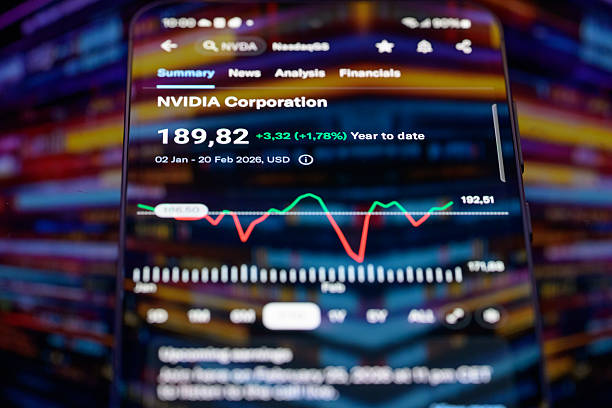
Yet within hours of the results dropping, Nvidia’s stock fell 5.5% to $184.89, erasing roughly $260 billion in market value in a single session and marking the stock’s worst one-day decline since April 2025.
Nvidia’s upcoming results are widely viewed as a key test for the broader AI trade, given how central its GPUs have become to data center buildouts at companies like Meta, Amazon, OpenAI, etc.
In other words, the sharp drop in its stock still reflects growing concern that a lot of future growth in the AI industry is already estimated, and that even solid numbers may no longer be enough to justify the company’s rich valuation.
Circular Financing Under the Microscope
One growing concern around Nvidia is the rise of so‑called circular financing in the AI ecosystem, where the same group of tech giants often appear as both Nvidia’s biggest customers and key beneficiaries of its soaring market value.
Large cloud providers and AI leaders pour billions into Nvidia GPUs to power their own AI services, which in turn helps drive revenue, profit, and a higher share price for Nvidia. Those higher valuations make it easier for the company to raise capital, invest in new products, and secure long-term supply deals, reinforcing the cycle.
Some industry analysts worry that this feedback loop can blur the line between sustainable demand and momentum-driven spending. They point out that hyperscalers funding large AI buildouts may indirectly support valuations that aim for continued, aggressive capital expenditure, even if returns from AI services are still uncertain.
This dynamic is also drawing fresh questions about how much of Nvidia’s growth is rooted in durable end-user demand, and how much depends on a relatively small circle of deep-pocketed buyers.
China, Regulation, and Geopolitical Exposure
Regulation and geopolitics add another layer of uncertainty, especially around China, one of the world’s largest chip markets. After months of lobbying by CEO Jensen Huang, U.S. officials recently allowed Nvidia to resume exports of its H200 AI accelerator to Chinese customers, but under tighter conditions.
The new rules require independent testing to verify AI capabilities, reduce the share of chips that can go to China, and ban its use in military applications.
What Investors Want to Hear From Nvidia
Against this backdrop, investors are looking for clear evidence that Nvidia can keep expanding beyond the initial wave of AI deployments. They want details on demand for next-generation platforms like Rubin, the health of long-term supply deals with hyperscalers, and how the company plans to manage regulatory and competitive risks without sacrificing growth.
