


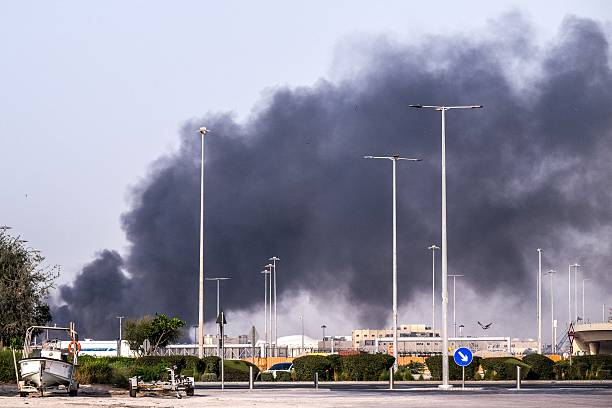
The drone strikes that hit Amazon Web Services (AWS) facilities in the Gulf region in March 2026 were not meant to only serve as a cyberattack. They were physical attacks, conveying a message that corporate infrastructure can also become a target during a military operation.
Iranian Shahed drones struck two AWS data centers in the United Arab Emirates (UAE) before dawn on March 1st, and a third facility in Bahrain was also hit. AWS confirmed structural damage, power disruption, fire, and water damage from firefighting systems across the affected sites.
These were the first known military strikes ever carried out against a major commercial cloud provider’s infrastructure amid an ongoing conflict between countries, which, in this case, includes Iran, the United States, and Israel.
What Went Down and What Went Offline
The drone strikes critically affected two out of three cloud availability zones in the UAE region and one availability zone in Bahrain.
The outages disrupted a range of local financial and consumer services, including delivery and ride-hailing platforms. As such, Amazon declared multiple zones with “hard down” status and said in internal communications that there was no timeline for when the UAE and Bahrain regions would return to normal operations.
The Military-Cloud Connection
Iranian Shahed’s justification to launch drone strikes on American-owned data centers may hold factual ground, as the U.S. military has been using AI to conduct military operations. For example, Anthropic’s Claude was used for intelligence analysis and operational support in the capture of Venezuelan President Nicolás Maduro.
When a service member uses AI, the computing infrastructure that powers it usually goes to a secure Amazon Web Services cloud that hosts secret government data and software tools. This makes it liable to any attack.
What This Means Moving Forward
Iran has also threatened to strike Nvidia, Microsoft, Apple, Google, and 14 other U.S. tech companies, with the IRGC explaining that these companies are a part and “main element in designing and tracking terror targets.” The group went further to say, “In response to these terrorist operations, from now on, the main institutions effective in terrorist operations will be our legitimate targets.”
While tech companies have been preparing data infrastructure against cyberattacks and natural disasters, threats from physical attacks have not been prioritized enough. The strikes also land at a difficult moment for the Gulf’s ambitions to become a global AI hub, given that Trump’s regional tour last year generated more than $2 trillion in investment pledges, including the planned Stargate UAE campus in Abu Dhabi.
The reality now is that when commercial cloud infrastructure also runs military AI systems, it does not stay commercial in the eyes of a country looking to attack.
