






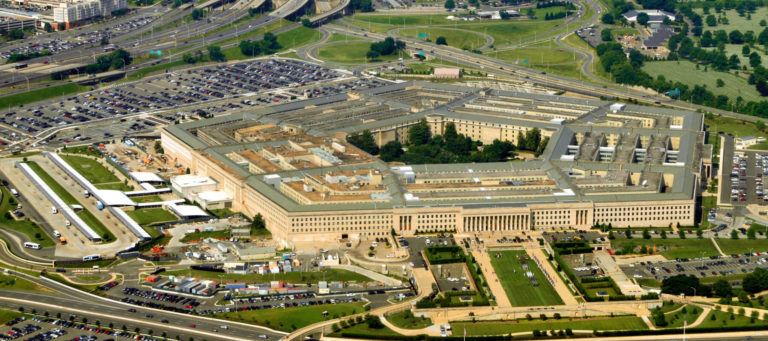
The tactical cloud is currently the Pentagon’s new answer to modern warfare. On the 1st of May 2026, the Defense Department signed agreements with eight tech companies. SpaceX, OpenAI, Google, Nvidia, Reflection, Microsoft, Amazon Web Services, and Oracle now form an AI coalition.
The Pentagon calls this group the “Magnificent Eight”. Their mission is to deploy advanced AI on the military’s most classified networks.
How the Tactical Cloud Moves AI From Experimentation to Deployment
At the moment, this tactical cloud marks a decisive shift. The military has moved from AI experimentation to full operational deployment. “These agreements accelerate the transformation toward establishing the United States military as an AI-first fighting force,” the Pentagon declared.
Moreover, Secretary Pete Hegseth’s January strategy drove this push. The unclassified GenAI.mil platform already serves over 1.3 million personnel. Users generated millions of prompts and deployed hundreds of thousands of AI agents in just five months. Now, many tasks take days instead of months.
The “Magnificent Eight” — Assembling a Multi-Vendor AI Arsenal
By introducing the tactical cloud, the Pentagon deliberately avoided a single provider. Each partner brings its own unique strengths.
For instance, SpaceX offers connectivity and resilience. OpenAI and Google supply frontier models. NVIDIA delivers compute hardware. Reflection contributes open-weight ecosystems. Microsoft, AWS, and Oracle enable enterprise-scale deployment. This multi-vendor strategy prevents vendor lock.
“Access to a diverse suite of AI capabilities from across the resilient American technology stack will give warfighters the tools they need,” the Pentagon stated.
Notably, Anthropic received no invitation. The company refused to sign terms allowing military use for “all lawful purposes”. As a result, the Pentagon labeled Anthropic a “supply chain risk”.
The Architecture of Secrecy — IL6, IL7, and the Tactical Cloud
Currently, the tactical cloud operates on Impact Level 6 and Impact Level 7 networks. IL6 handles secret-level data. IL7 serves the most highly classified systems. These agreements authorize AI for “lawful operational use”.
In addition, the Pentagon expects frontier AI to streamline data synthesis, elevate situational understanding and augment warfighter decision-making in complex operational environments.
Beyond centralized networks, the military pushes AI to the tactical edge. A $30 billion initiative builds AI compute centers, regional processing hubs, and forward-deployed edge capabilities.
Geopolitical Stakes — Racing Against China’s Military AI Ecosystem
Consequently, a geopolitical urgency is driving this alliance-building. China has invested heavily in sovereign AI. Companies like DeepSeek, Alibaba, and Tencent support Beijing’s military ecosystem.
In addition, Chinese open models have spread rapidly across global software markets so the Pentagon cannot afford to fall behind. The Anthropic exclusion also reflects this pressure. The company sought guardrails against autonomous weapons and mass surveillance.
However, the Pentagon refused such restrictions. Defense officials want maximal flexibility. They also seek to avoid dependence on any single provider that might impose conditions on military use.
The Control Problem — Governance, Accountability, and the Future of the Tactical Cloud
Ultimately, this modular approach preserves democratic accountability. Military AI cannot have grey areas. The government must test for bias, enforce rules of engagement and ensure alignment with U.S. law. In addition, the Anthropic dispute exposed deep tensions between commercial ethics and military necessity.
In the end, the multiplication of alliances is about retaining civilian control over AI-enabled warfare. The tactical cloud represents a generational investment and its consequences will go far beyond the battlefield.


