






America’s race to build bigger and more powerful AI systems has now clashed with a basic limitation – the electric grid is suffering under the load of new data centers that consume as much power as a whole town, and it is affecting common citizens.
In response, the White House has brokered a new agreement called the “Ratepayer Protection Pledge,” under which major tech companies will pay for the extra electricity generation and grid upgrades their AI data centers require, instead of passing those costs on to households and small businesses.
Why AI Is Creating an Energy Problem
The deal comes as AI data centers emerge as one of the fastest-growing sources of electricity demand in the United States. Many industry researchers have suggested that by 2030, data centers could account for roughly a quarter of new load growth on the U.S. grid, driven largely by AI training and inference workloads.
This surge has already triggered concerns from regulators, utilities, and consumer advocates about reliability and rising bills. In early 2025, the Biden administration signed an executive order directing the Departments of Energy and Defense to lease federal sites for gigawatt-scale AI data centers and clean power projects.
This effort has been complemented by the Trump administration. Since taking office, the Trump administration has added more measures, including a grid security order to keep existing generation online and actions to speed permitting for new capacity that can serve AI loads. And a new addition is this Ratepayer Protection Pledge.
What the Ratepayer Protection Pledge Actually Does
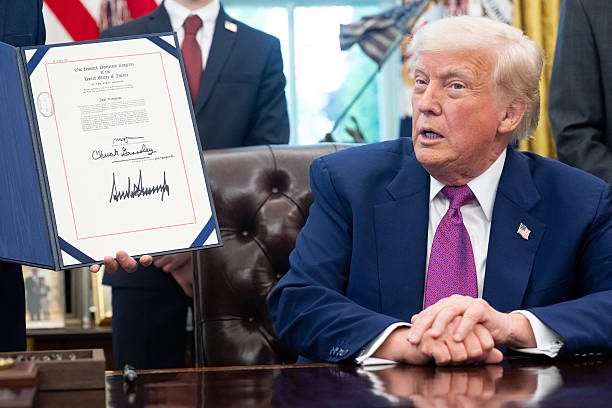
At a March 2026 White House event, President Donald Trump announced that companies including Google, Microsoft, Meta, Oracle, OpenAI, xAI and other hyperscalers had signed what the administration calls the “Ratepayer Protection Pledge.”
Under the agreement, these firms commit to build, procure, or fund new power plants and to pay for all related grid infrastructure needed to run their AI and cloud data centers. The White House says this means residential and commercial electricity customers should not see their bills rise because of AI-driven energy demand.
The pledge also requires companies to negotiate their own rate structures with utilities and to bear the costs of the energy they reserve, whether or not they end up using it. In practice, this forces large tech companies to pay up front for both generation and transmission upgrades, instead of spreading those costs across all customers
And under the new White House framework, tech companies are also expected to provide solutions such as new natural gas or nuclear plants, expanded renewables, on-site generation, and major grid upgrades such as substations and high-voltage lines.
This pledge is tied to Trump’s broader “Winning the Race: America’s AI Action Plan,” which links AI leadership to robust domestic energy infrastructure and supply chains.
What It Means for Communities and the Industry
For local communities, the pledge is a response to the backlash against new AI data centers, with a promise that higher industrial demand will not affect household bills.
For the tech industry, the agreement formalizes a cost that many companies were already starting to absorb as they struck bespoke deals for dedicated clean energy, backup generation and long-term power purchase agreements. Case in point is Google signing power deals with AES Corp and Xcel Energy for its AI data centers buildout.
For now, the takeaway is that while the new White House deal does not solve every challenge tied to AI’s growing appetite for electricity, it makes a point for who exactly pays for the AI infrastructure buildout. Instead of spreading costs across the grid, the largest beneficiaries of AI data centers are being asked to fund the power plants and pay for the electricity that keeps their systems running.


