






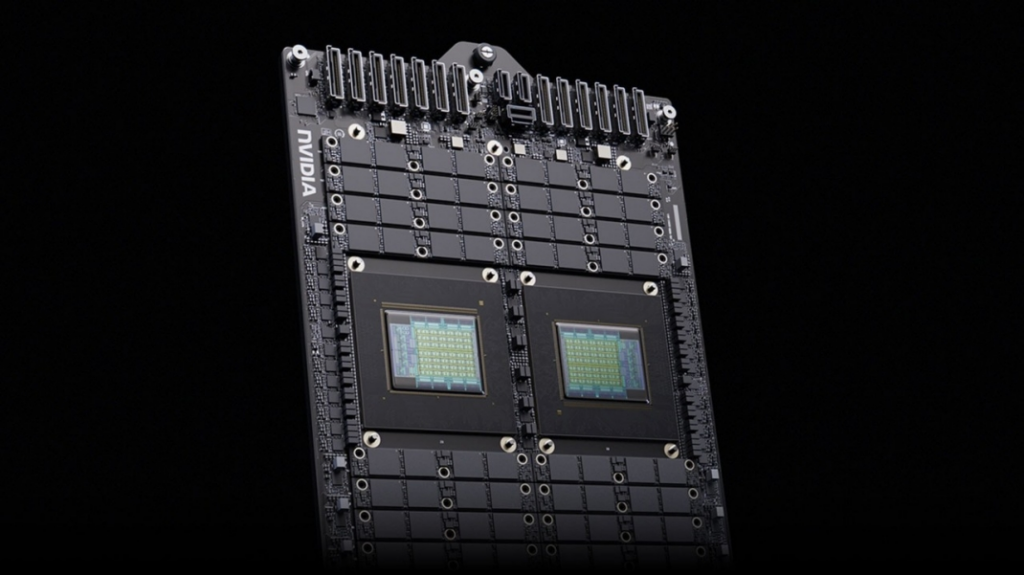
Nvidia’s Vera CPU is currently one of the most talked‑about hardware launches in artificial intelligence. In May 2026, Nvidia introduced the 88‑core processor as part of its next generation of AI infrastructure.
After the launch, the company delivered early systems to OpenAI and SpaceX. This early access shifted attention from the launch itself to a more interesting observation, two leading AI companies are testing Nvidia’s first major CPU.
Why the Vera CPU Represents Nvidia’s Bet Yet
During the AI boom, Nvidia built its dominance on GPUs. The company now wants a larger role in AI infrastructure and that ambition bred the Vera CPU.
Unlike traditional server processors, Vera was designed specifically for AI environments. The chip features 88 custom Olympus cores and memory bandwidth reaching 1.2 TB/s through LPDDR5X.
More importantly, Vera represents Nvidia’s expansion into a market long dominated by Intel and AMD. Instead of supplying only accelerators, Nvidia now aims to provide more of the hardware that powers AI operations.
Why OpenAI and SpaceX Got Early Access
New hardware attracts attention, but the first users often attract even more. That’s what happened with Nvidia supplying early Vera systems to OpenAI and SpaceX. Both organizations run demanding computing environments and regularly evaluate new infrastructure.
For Nvidia, these deployments offer a real‑world test of Vera. Meanwhile, OpenAI and SpaceX gain early experience with a platform built for future AI workloads.
As a result, interest in Vera now extends far beyond Nvidia’s customer list. The involvement of such high‑profile users naturally raises curiosity about what makes this processor different from a conventional CPU.
The 88-Core Sandbox Explained
The difference begins with Vera’s 88 custom Olympus cores and its spatial multithreading. This design splits each core into two logical threads, giving Vera 176 threads total. CPUs coordinate activity across computing systems, while GPUs handle intensive calculations.
As AI systems grow more complex, that coordination role becomes critical. Vera addresses this challenge by embracing unpredictable branching logic, a task that causes x86 cores to stall.
In addition, Nvidia claims Vera completes agentic tasks 1.8 times faster than x86. That performance explains why Nvidia calls Vera a “sandbox” for experimentation. However, the processor was never meant to work alone.
How Vera Fits Into Nvidia’s Rubin Vision
Instead, Nvidia designed Vera to work alongside its upcoming Rubin GPU platform. Together, the CPU and GPU form a unified computing architecture. Vera moves data at 1.8 TB/s through NVLink‑C2C but copper wiring cannot handle that load.
Therefore, Nvidia turned to Spectrum‑X Ethernet Photonics with co‑packaged optics, boosting power efficiency fivefold. SpaceX requires photonics for its Colossus II cluster. Without optical interconnects, Vera would starve for bandwidth and this will kill agent performance.
Hence, Nvidia built a full optical ecosystem around Vera. Organizations can now deploy a coordinated platform instead of mixing parts from different vendors.
What Vera CPU Means For the Future of AI Infrastructure
Taken together, Vera’s launch, its early deployments, and its connection to Rubin point to a larger shift. For years, AI hardware discussions focused mainly on GPUs.
Now, companies increasingly examine how every component works together inside large computing environments. This explains the interest from OpenAI and SpaceX. They are not simply evaluating a new processor, they are testing a broader approach to AI infrastructure.
Ultimately, Vera CPU offers an early glimpse of where AI computing is heading. General availability arrives in fall 2026. As AI systems continue to expand, integrated platforms like Vera‑Rubin may become just as important as the individual chips inside them.


