






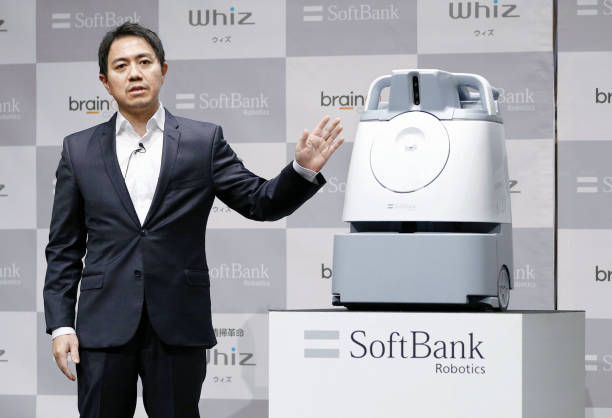
SoftBank is creating a new company called Roze, designed to deploy autonomous robots to build artificial intelligence (AI) data centers across the United States.
According to reports from the Financial Times and the Wall Street Journal, SoftBank is already preparing the venture for a public listing, with some executives targeting the second half of 2026 for an IPO on a U.S. exchange. The desired valuation is reported to be around $100 billion.
The plan, driven by SoftBank founder and CEO Masayoshi Son, reflects a calculated response to one of the most pressing bottlenecks in AI development today. Building the physical infrastructure needed to run AI systems at scale has become slower and more expensive than the demand for that infrastructure warrants.
Why Robots, Why Now
The Information Technology and Innovation Foundation reported that, as of November 2025, the construction industry was short of approximately 439,000 workers. That shortage is now showing up and affecting data center development timelines. Meanwhile, global data center construction spending is projected to exceed $300 billion annually by 2028, as it’s driven by AI workload growth. As such, SoftBank sees its opening in the gap between what needs to be built and the workforce available to build.
Roze will focus on building data centers optimized for artificial intelligence workloads, and according to the Financial Times, the venture will use robots to optimize the construction workflow.
The scope for this project also extends beyond the construction phase. SoftBank is working to automate not only data center construction but also day-to-day facility management tasks, including plans to build robots that can install servers, inspect existing machines for faults, and replace them when necessary.
What SoftBank Is Putting Into Roze
The new company’s asset base could draw from what SoftBank already owns, pulling in energy holdings, land, and infrastructure from across the conglomerate’s portfolio. ABB Robotics, a deal SoftBank struck last year, would likely come along too, with plans to marry that hardware business to AI-driven software.
Valued at $5.4 billion, that acquisition brought SoftBank robotic arms optimized for welding, which is one of the tasks Roze might seek to automate during data center construction projects. SoftBank has also been working on a cableless server rack design that replaces traditional power cables with metal bars and uses custom network connectors instead of fiber-optic wires, a redesign specifically intended to make robotic installation and maintenance more practical.
The Larger Infrastructure Play
Roze does not exist in isolation. At the start of last year, SoftBank partnered with OpenAI, Oracle, and others on the Stargate project, a planned $500 billion investment to build AI data center capacity across the U.S. SoftBank is also building a 10-gigawatt data center in Ohio, powered by a $33 billion natural gas plant funded by the Japanese government.
The Japanese conglomerate’s broader AI strategy is now structured around three pillars: an equity position in OpenAI for the application layer, Arm Holdings for the chip layer, and a portfolio of compute and infrastructure investments at the physical layer. Roze is described as the keystone of that third pillar.
However, there remains a resistance inside SoftBank as not everyone is convinced. The Financial Times found resistance among certain SoftBank executives toward the $100 billion figure and the aggressive schedule, with geopolitical instability in the Middle East among the factors fueling their doubts. If market or regulatory conditions shift, the IPO could be pushed to 2027.
For now, what is clear from the assets being assembled to the IPO timeline being pursued is that the company is treating robotic construction of AI infrastructure as a commercial category worth owning as opposed to just funding from a distance.


