


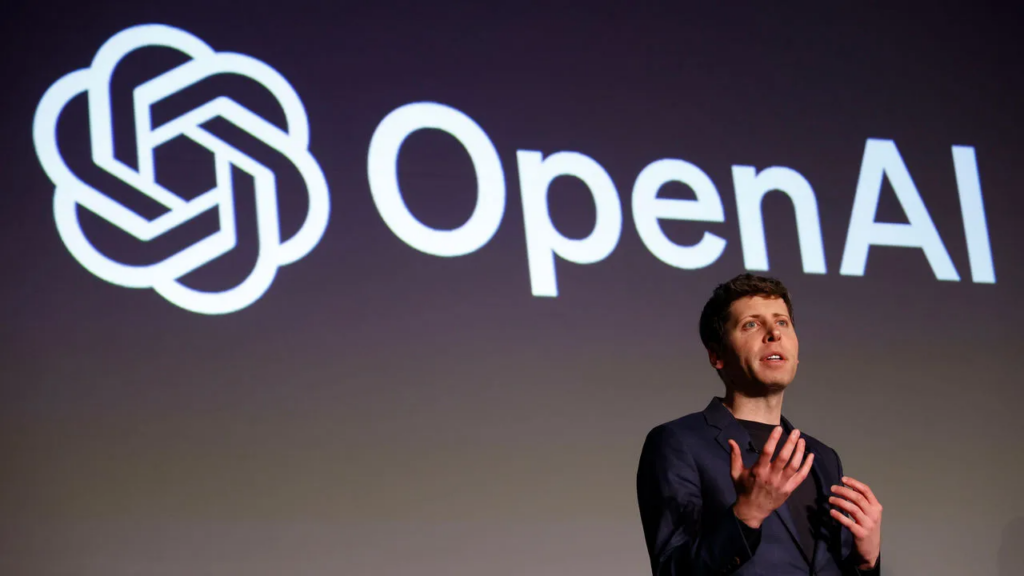
The OpenAI IPO is the most anticipated financial event of 2026. This move marks the company’s shift from a research lab to a public utility. Before this, OpenAI raised a record $110 billion funding round in February, which valued the company at $840 billion.
Major backers like Amazon and Nvidia provided the capital to scale global AI infrastructure. By securing these funds, OpenAI can manage a projected $14 billion annual loss while chasing a trillion-dollar valuation.
To understand the impact, an IPO allows a private company to sell shares to the general public. This move gives everyday investors the chance to own part of the business and profit from its growth. For OpenAI specifically, going public provides the massive liquidity needed to fund its expensive “Intelligence Age” mission.
Structural Changes for the OpenAI IPO
OpenAI recently converted into a Public Benefit Corporation (PBC) to align its profit goals with its mission. In this new arrangement, the company can seek high returns while remaining committed to safe AI development. The original nonprofit OpenAI Foundation also retains a 26% equity stake to supervise operations.
Consequently, the company’s founding principles will guide its decisions even after it enters the stock market. The company is also narrowing its focus under the “Simo Strategy” led by Applications CEO Fidji Simo.
Specifically, OpenAI is ditching experimental side projects like standalone hardware to focus entirely on business tools. By concentrating on productivity, leadership aims to present a cleaner financial story to potential Wall Street investors.
Revenue and the $1 Trillion Goal
OpenAI currently generates $25 billion in annualized revenue, supported by over 50 million paying subscribers.
To reach a $1 trillion valuation, the company is merging its tools into a single “Desktop Super App.” This application will combine ChatGPT, Codex coding features, and web browsing into one workspace for professionals.
Despite high revenue, the costs of training and running frontier models remain a significant financial burden. Experts anticipate losses will exceed $14 billion this year due to massive electricity and chip requirements.
For this reason, an IPO is necessary to sustain this aggressive pace of global infrastructure expansion.
Investor Risks Surrounding the OpenAI IPO
Rising competition from Anthropic poses a major threat to OpenAI’s lead in the enterprise market.
By March 2026, Anthropic had captured roughly 40% of enterprise AI spending. This shift forced OpenAI to go back to the drawing board to win back developers and large corporate clients.
In addition, investors have to navigate the “AGI Clause” in OpenAI’s partnership with Microsoft. This provision restricts Microsoft’s access to technology once OpenAI achieves human-level intelligence.
As a result, uncertainty about the company’s most valuable future assets could impact its final IPO price.
What This Means for Users
For a start, OpenAI released GPT-5.4 mini and nano on March 17, 2026, to offer faster performance.
These models feature “Agentic AI,” allowing the software to perform multi-step tasks across your computer autonomously. This capability includes interpreting screenshots and using a mouse and keyboard to complete work.
However, public market pressure is driving a move toward more aggressive usage-based pricing. High-performance reasoning models are increasingly reserved for expensive “Pro” and “Team” subscription tiers.
Meanwhile, free users may rely on smaller models as the company prioritizes its most profitable customers.
Ultimately, the success of this IPO will determine if advanced AI can be a sustainable global utility. It remains to be seen if OpenAI can satisfy investors while focusing on its mission.
One thing is certain though, this IPO represents a defining moment for the entire AI industry and its future impact on society.
