






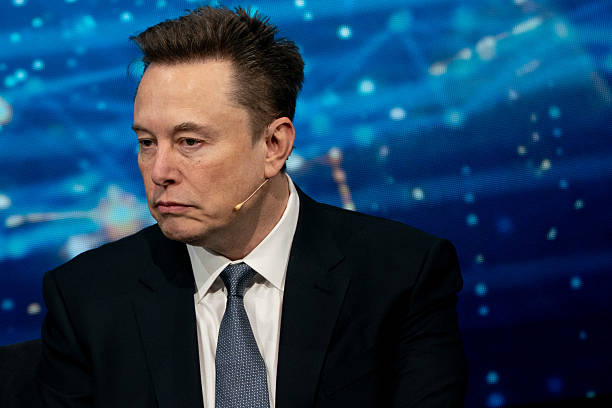
Elon Musk is demanding between $79 billion and $134 billion in damages from OpenAI and Microsoft, escalating a legal battle that claims the artificial intelligence company abandoned its nonprofit roots through its recent high-profile restructuring to a for-profit entity.
U.S. District Judge Yvonne Gonzalez Rogers in Oakland, California, agreeing that there was “plenty of evidence” at a hearing, concluded for a jury to consider the claims brought forward by Musk and his lawyers.
Musk’s Legal Argument and the Damages Calculation
The figure comes from expert witness C. Paul Wazzan, a financial economist whose analysis combines both Musk’s initial financial contributions and the technical knowledge and business expertise he brought to OpenAI’s early development. Wazzan determined that Musk is entitled to a hefty portion of OpenAI’s current $500 billion valuation based on his $38 million contribution when he co-founded the startup in 2015, which represented about 60% of OpenAI’s total funding as at that time.
According to the filing, OpenAI has now gained between $65.5 billion and $109.4 billion from the billionaire entrepreneur’s former contributions, while Microsoft gained between $13.3 billion and $25.1 billion.
The calculations account for both monetary donations and non-financial contributions, including Musk’s role in recruiting staff, connecting founders with industry contacts, and lending credibility to the organization during its formative years.
The legal argument rests on the premise that Musk should be compensated similarly to an early startup investor. “Just as an early investor in a startup company may realize gains many orders of magnitude greater than the investor’s initial investment, the wrongful gains that OpenAI and Microsoft have earned – and which Mr. Musk is now entitled to disgorge – are much larger than Mr. Musk’s initial contributions,” Musk’s lawyers argued.
The lawsuit also alleges that OpenAI’s co-founders, including Sam Altman, fraudulently misled Musk about the company’s plans to remain a nonprofit organization dedicated to developing artificial intelligence for humanity’s benefit. Musk departed from OpenAI’s board in 2018, later launched his own AI company called xAI and its chatbot Groq in 2023.
OpenAI has vigorously disputed both the damages calculation and the underlying allegations. OpenAI, in a statement, called it “a frustrated commercial competitor seeking to slow down a mission-driven market leader.” The company maintains that the lawsuit represents an ongoing pattern of harassment aimed at slowing down a competitor while Musk builds his own AI venture.
In their own court filings, OpenAI and Microsoft asked the judge to limit what Musk’s lawyer may present to jurors, arguing his analysis should be excluded as “unverifiable” and as seeking an “implausible” transfer of billions from a nonprofit to a former donor-turned-competitor.
Microsoft, which has invested billions in OpenAI since 2019 and now holds a 27% ownership stake in the company’s for-profit operations, has also pushed back against the allegations. A Microsoft lawyer previously stated there is no evidence the company aided or abetted OpenAI in any alleged wrongdoing.
Broader Implications
The dispute has its roots in OpenAI’s September announcement of a major restructuring plan. At that time, OpenAI revealed it had signed a memorandum of understanding (MoU) and granted a 27% ownership stake to Microsoft, its longtime supporter, in a transition designed to maintain the startup’s nonprofit arm in control of its for-profit operations. Now this structural change has become a central point of contention in Musk’s lawsuit, which argues that the transformation from a public charity to a for-profit entity fundamentally betrayed the organization’s founding mission.
District Judge Rogers rejected requests by OpenAI and Microsoft to dismiss claims by Musk and ordered the case to proceed to a jury trial set for late April. This ruling marks a significant development in the case, which has survived multiple dismissal attempts since Musk first filed suit in 2024.
With both sides now gearing up for trial, the case promises to become one of the most closely watched legal battles in the technology sector. The proceedings will likely include testimony from key figures in the AI industry and could shed new light on the internal deliberations that shaped OpenAI’s transformation from a research nonprofit to one of the world’s most valuable AI companies today.


