


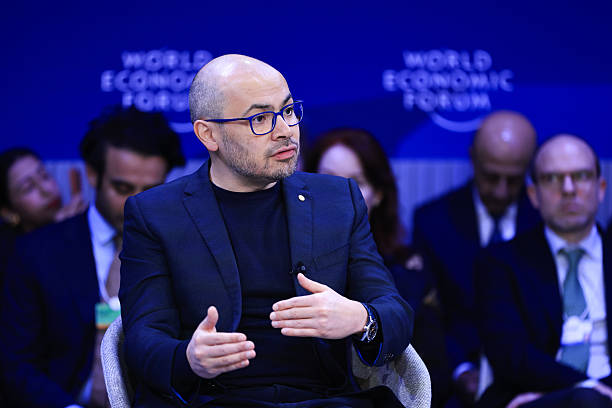
Google DeepMind CEO Demis Hassabis confirmed this week that the company has no plans to introduce advertising in its Gemini chatbot, marking a sharp contrast with competitor OpenAI’s recent decision to test ads in ChatGPT.
Speaking at the World Economic Forum in Davos, Hassabis made it clear that Google’s AI assistant will remain ad-free while OpenAI moves forward with sponsored content for millions of users.
A Direct Challenge to OpenAI’s Strategy
The announcement comes at a critical moment in the AI industry, where companies are grappling with enormous infrastructure costs on AI while trying to maintain user trust. OpenAI revealed last week that it would begin testing ads in ChatGPT for free users and those on the $7/month Go subscription tier, with ads appearing at the bottom of the chatbot’s responses.
According to OpenAI, the move is designed to support broader access to AI tools without increasing costs, though higher-tier subscriptions like Plus, Pro, Business, and Enterprise will remain completely ad-free.
When asked about OpenAI’s strategy, Hassabis acknowledged that he was “a little bit surprised they’ve moved so early into that.” His remarks suggest that OpenAI may be facing financial pressure as it burns through cash on expensive AI computing and competes with Google’s expanding Gemini platform as well as other tech giants.
The strategic divide between the two companies is clear in the sense that while OpenAI is pursuing a rapid build-release-monetization approach, Google is taking a more patient, long-term strategy.
Why Google can Afford to Wait
Hassabis emphasized that trust is central to Google’s decision-making around Gemini. He explained that chatbots serve a fundamentally different purpose than traditional search engines. While Google Search already understands user intent and can display relevant ads accordingly, chatbots are evolving into personal digital assistants that users rely on for intimate, tailored guidance across many aspects of their lives.
“In the realm of assistants, if you think of the chatbot as an assistant that’s meant to be helpful and ideally in my mind, as they become more powerful, the kind of technology that works for you as the individual,” Hassabis said in an interview with Axios. “That’s what I’d like to see with these systems.”
The trust factor is important because when people turn to AI chatbots for advice on personal matters, whether it’s health decisions, financial planning, or emotional support, the presence of advertising could create questions about whether recommendations are genuinely helpful or influenced by commercial interests.
Hassabis also pointed out that this represents a different use case from search, where users are often already in a discovery mode and may welcome relevant product suggestions. “That’s a very different construct,” Hassabis said.
For OpenAI, the calculus is different. With an estimated 800 million weekly active users and the majority on free or low-cost tiers, the company is under pressure to generate revenue from a massive user base that isn’t paying subscription fees. Training advanced AI models can cost billions of dollars, and the energy and computing infrastructure required to run ChatGPT at scale keeps mounting.
What This Means for the AI Race
As the AI race intensifies, the advertising question reveals competing visions for how these companies want to grow and when they should prioritize revenue. On the one hand, OpenAI’s approach reflects the urgency of a company that needs to fund its race toward artificial general intelligence (AGI) while satisfying investors and managing operational costs.
On the other hand, Google’s strategy, backed by its dominant position in digital advertising, allows for a slower burn like investing in user experience and trust with the bet that dominance in AI assistance will eventually translate to broader ecosystem benefits.
However, what remains to be seen is whether Gemini will truly remain ad-free in the long term. The temptation to monetize a popular AI product may grow as competition heats up in the AI space and development costs continue to rise.
