






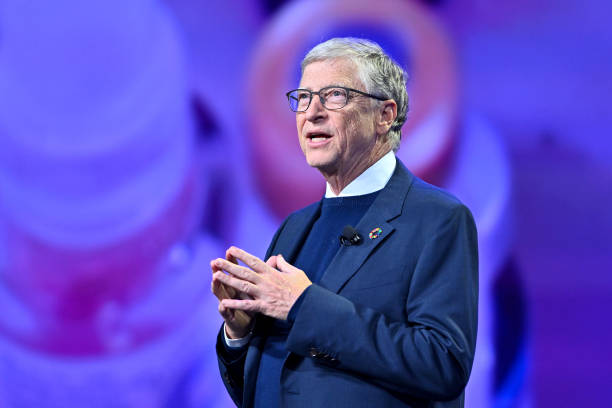
The Gates Foundation and OpenAI have launched Horizon 1000, a $50 million initiative that will bring artificial intelligence (AI) tools to 1,000 primary healthcare clinics across Africa by 2028.
The partnership, announced at the World Economic Forum in Davos last week, targets one of the continent’s most urgent challenges which is a healthcare workforce shortage so severe that even aggressive hiring and training programs wouldn’t be able to close the gap in the foreseeable future, according to research.
The pilot project will begin in Rwanda, a country where one healthcare worker per 1,000 people is the order of the day, far below the World Health Organization’s recommended ratio of four per 1,000. Bill Gates noted in his announcement that at the current pace of training and hiring, it would take 180 years to close that gap in Rwanda alone.
Now across sub-Saharan Africa, the shortage amounts to nearly 6 million healthcare workers, a deficit that contributes to between 6 million and 8 million deaths annually in low- and middle-income countries, according to WHO estimates.
As such, the Horizon 1000 initiative represents a shift in how innovators and people who want to contribute to change approach global health challenges. Rather than simply funding infrastructure or training programs, Gates and OpenAI are committing funding, technology, and technical support to help African governments deploy AI tools that can augment the capabilities of existing healthcare workers.
The collaboration builds on the Gates Foundation’s longstanding principle that people in developing regions shouldn’t have to wait decades for new technologies to reach them.
What the Technology Will Do
The AI tools being deployed under Horizon 1000 will handle tasks that currently consume hours of healthcare workers’ time and mental energy. Gates explained that the goal is to make healthcare “much higher quality, and if possible, twice as efficient as it is today – taking away the paperwork, organizing resources so the patient knows what is available and when to come for their appointments.”
In practice, this means AI systems will support clinical decision-making, help with patient triage, maintain records, and provide multilingual communication support. The technology will also allow patients to describe symptoms in their local languages, with AI translating and summarizing the information before a healthcare worker even enters the room.
For instance, Rwanda’s Minister of Information, Communication and Technology, Paula Ingabire, said the country plans to create decision-support tools for its 60,000-plus community health workers who provide primary healthcare across the country.
There’s also the focus on malaria. Around 70% of the cases community health workers deal with every year are malaria, so Rwanda wants an AI tool to help improve diagnosis and better anticipate when and where to expect malaria cases. This predictive capability could help health systems allocate resources more effectively and respond to outbreaks before they spiral.
Rwanda’s selection as the pilot location isn’t accidental, as the country has already demonstrated a willingness to adopt new technologies rapidly, from using drones to spray mosquito breeding sites to establishing an AI-powered Health Intelligence Center in Kigali.
The country is also pursuing an ambitious expansion of its healthcare workforce through the Rwanda 4×4 Reform initiative, which aims to meet the WHO’s recommended staffing ratios. But even with this aggressive hiring push, officials recognize they’ll need technological support to deliver quality care at scale. The AI tools coming through Horizon 1000 are designed to complement these efforts, not replace them.
While Rwanda will serve as the initial testing ground, the partnership has broader ambitions. Gates said the scheme will start in Rwanda, with Kenya, South Africa, and Nigeria coming after.
Why OpenAI and Gates’ initiative Might Work for Africa
Gates and other observers believe AI adoption could actually happen faster in developing countries than in wealthier nations, for a somewhat counterintuitive reason being that there’s less institutional resistance. Peter Sands, CEO of the Global Fund to Fight AIDS, Tuberculosis and Malaria, pointed out that in high-income countries, AI tools face pushback from workers worried about job displacement and organizations resistant to changing established workflows. In regions with massive workforce shortages, that resistance is far less likely.
The technology also aligns with behavioral changes that are a result of the wide adoption of AI. Patients are increasingly turning to digital platforms to understand symptoms and treatment options, even in low-resource settings where smartphone penetration is still at a low. AI-powered health advisors could provide a higher-quality version of what people are already seeking out informally.
The Broader Context
This partnership fits within Gates’ recent pivot toward Africa-focused philanthropy. In June 2025, he pledged to direct $200 billion of his lifetime fortune toward Africa over the next two decades, with a particular emphasis on collaborating with governments that prioritize health and human development. He’s focusing on improving primary healthcare, reducing child and maternal mortality, fighting infectious diseases such as polio, HIV, and malaria, and advancing education.
His reason for particularly funding the improvement of primary healthcare and reducing child and maternal mortality on the continent is the belief that it is the most cost-effective and impactful way to break cycles of poverty and disease and laying the foundation for long-term economic development and prosperity.
The collaboration also highlights the evolving relationship between major tech companies and global health organizations. OpenAI CEO Sam Altman framed the partnership in terms of AI’s societal impact, saying the technology “is going to be a scientific marvel no matter what, but for it to be a societal marvel, we’ve got to figure out ways that we use this incredible technology to improve people’s lives.”
For OpenAI, the health sector represents a natural expansion beyond AI-powered consumer applications and enterprise software. The company has already introduced ChatGPT Health and is positioning itself as a player in medical AI. Working with the Gates Foundation on a high-profile global health initiative builds credibility and generates real-world data about how AI performs in challenging deployment environments.


