

Close Menu

    Stay Ahead with Exclusive Updates!

    Enter your email below and be the first to know what’s happening in the ever-evolving world of technology!

    What's Hot

    AirPods Max 2: USB-C, Live Translation, and the H2 Upgrade

    March 26, 2026

    Big Tech Turns to Debt Markets to Fund Massive AI Infrastructure Spending

    March 26, 2026

    Atlassian Layoffs 2026: Why 1,600 Jobs Were Cut to Fund AI

    March 25, 2026
    Facebook X (Twitter) Instagram
    Facebook X (Twitter)
    PhronewsPhronews
    • Home
    • Big Tech & Startups

      Big Tech Turns to Debt Markets to Fund Massive AI Infrastructure Spending

      March 26, 2026

      Atlassian Layoffs 2026: Why 1,600 Jobs Were Cut to Fund AI

      March 25, 2026

      The AI Chip War Is Changing — Nvidia’s Deal With Groq Signals a New Strategy

      March 25, 2026

      OpenAI IPO Explained: What Investors and Users Should Expect in 2026

      March 24, 2026

      Why Anthropic’s Claude Marketplace Could Be the Next Big Platform for AI Tools

      March 24, 2026
    • Crypto

      Quantum Computing Advances Force Coinbase and Institutional Custodians to Rethink Crypto Security

      March 8, 2026

      AI Assisted Hacking Groups Target Crypto Firms With Multi-Layered Social Engineering

      February 18, 2026

      Global Crypto Regulations Expand as 2026 Begins With New Data Collection Frameworks and National Laws

      January 16, 2026

      Coinbase Bets on Stablecoin and On-Chain Growth as Key Market Drivers in 2026 Strategy

      January 10, 2026

      Tether Faces Ongoing Transparency Questions and Reserve Scrutiny Amid Massive Bitcoin Accumulation

      January 5, 2026
    • Gadgets & Smart Tech
      Featured

      AirPods Max 2: USB-C, Live Translation, and the H2 Upgrade

      By preciousMarch 26, 2026
      Recent

      AirPods Max 2: USB-C, Live Translation, and the H2 Upgrade

      March 26, 2026

      How ABB and Nvidia are Perfecting Industrial Robotics using AI Simulation

      March 20, 2026

      Neura Robotics Reaches €4B Valuation With Tether Backing

      March 12, 2026
    • Cybersecurity & Online Safety

      Can AI Hack You Before Hackers Do? How RunSybil Is Changing Cyber Defense

      March 25, 2026

      Why Investors Just Put $120M Into Non-Human Identity Security — A Growing Cybersecurity Gap

      March 23, 2026

      Beyond the Firewall: Why Google’s Purchase of Wiz is a Wake-Up Call for Enterprise Security

      March 19, 2026

      Hyper-Scale Hacking: Why Your Traditional Security is No Match for AI-Driven Cybercrime

      March 17, 2026

      UK Warns of Heightened Iran-Linked Cyber Threats Amid Middle East Tensions

      March 6, 2026
    PhronewsPhronews
    Home»Artificial Intelligence & The Future»Big Tech Turns to Debt Markets to Fund Massive AI Infrastructure Spending
    Artificial Intelligence & The Future

    Big Tech Turns to Debt Markets to Fund Massive AI Infrastructure Spending

    preciousBy preciousMarch 26, 2026No Comments
    Facebook Twitter Pinterest LinkedIn WhatsApp Reddit Tumblr Email
    Share
    Facebook Twitter LinkedIn Pinterest Email
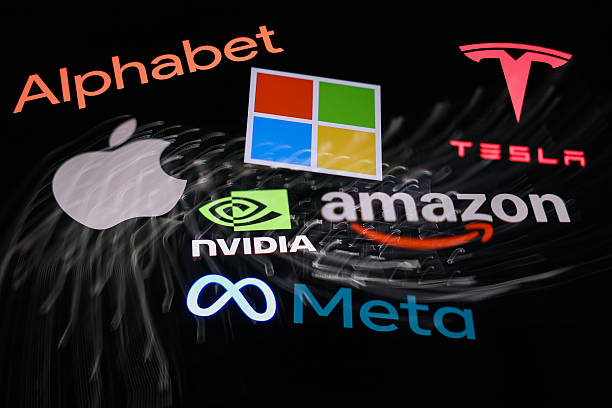
    Photo Credit: Jakub Porzycki/NurPhoto via Getty Images

    Big technology companies are turning to debt markets to sell their bonds to pay for the most expensive artificial intelligence (AI) projects they have initiated in the race to achieve AI supremacy.

    From cloud giants to chip-developing platforms, firms that once prided themselves on cash-rich balance sheets are now raising tens of billions of dollars in debt to finance data centers and build specialized AI chips. 

    A Wave of AI-Linked Borrowing

    Over the past year, companies including Microsoft, Alphabet, Amazon, and Oracle have made capital spending plans that run into the hundreds of billions of dollars, much of it directed toward AI infrastructure. Industry analysts have estimated that combined capital expenditure tied to AI and cloud for 2026 could reach around $630-650 billion, representing a sharp jump from the already high levels of spending in 2024 and 2025.

    Now in 2026, debt markets are becoming a central source of that cash for these companies. Rather than funding everything from existing cash reserves, many of these tech companies are selling large bond deals to lock-in their financing for multi‑year buildouts of data centers and AI networks. 

    Alphabet’s Record Bond Sale

    Alphabet has become one of the clearest examples of this trend. In February 2026, the Google parent company raised a bond offering of roughly $20 billion to fund its $185 AI infrastructure buildout. Company statements and coverage of the sale note that the proceeds are earmarked for data centers, GPUs and advanced networking equipment that support Alphabet’s AI services. 

    This sale saw a strong demand from investors, as they were very eager to buy the company’s long-term AI-related bonds higher than the amount offered. By relying on bonds instead of new equity, Alphabet can raise large sums without diluting existing shareholders while still moving quickly on multi‑billion‑dollar projects. 

    Alphabet is not alone in this huge spending on AI. Microsoft has said it plans to spend about $150 billion on its development and acceleration of its AI products in 2026, which is almost double of the company’s spending in 2025. Amazon is also expecting to spend roughly $200 billion in capital expenditure in 2026 after spending about $130 in 2025, with the need to speed up the development across AI chips, robotics and any other related infrastructure. 

    Additionally, there is Oracle and its balance sheet that illustrates how legacy enterprise players are also turning to debt to stay in the AI race. Coverage of corporate filings and market analysis shows Oracle holding close to $96 billion in total debt after raising about $18 billion via a bond offering and securing an additional $38 billion loan in late 2025. 

    Much of that financing is directed toward expanding its cloud and AI‑capable data center footprint, which allows the company to further compete for training and inference workloads in the industry. 

    Why Debt, and Why Now?

    Several forces are pushing Big Tech toward bond markets. First, the AI boom is hardware‑heavy, meaning modern AI models require vast compute clusters, energy‑hungry data centers and custom chips, all of which demand upfront spending measured in tens of billions of dollars per company. Second, while many of these firms remain highly profitable, the speed and scale of the AI infrastructure buildout exceed and outpaces their cash flow. 

    For investors and regulators, the rise in AI‑funded debt is a sign of the structural change in how the largest tech companies now operate. The industry has noted that the group of companies once known for high‑margin software and services is now evolving into a set of companies that also run some of the world’s most capital‑intensive AI infrastructure on debt.

    It is why the success or failure of this over $600 billion infrastructure push from these companies will shape both equity and credit markets for years.

    AI arms race AI capital expenditure AI hardware-heavy economics AI infrastructure AI innovation AI-linked borrowing trends Amazon Aphabet Artificial Intelligence Big Tech AI spending 2026 Corporate bond markets AI Hyperscaler data center funding Microsoft Oracle
    Share. Facebook Twitter Pinterest LinkedIn Tumblr Telegram Email
    precious
    • LinkedIn

    I’m Precious Amusat, Phronews’ Content Writer. I conduct in-depth research and write on the latest developments in the tech industry, including trends in big tech, startups, cybersecurity, artificial intelligence and their global impacts. When I’m off the clock, you’ll find me cheering on women’s footy, curled up with a romance novel, or binge-watching crime thrillers.

    Related Posts

    AirPods Max 2: USB-C, Live Translation, and the H2 Upgrade

    March 26, 2026

    Atlassian Layoffs 2026: Why 1,600 Jobs Were Cut to Fund AI

    March 25, 2026

    Can AI Hack You Before Hackers Do? How RunSybil Is Changing Cyber Defense

    March 25, 2026

    Comments are closed.

    Top Posts

    MIT Study Reveals ChatGPT Impairs Brain Activity & Thinking

    June 29, 2025

    Coinbase responds to hack: customer impact and official statement

    May 22, 2025

    From Ally to Adversary: What Elon Musk’s Feud with Trump Means for the EV Industry

    June 6, 2025

    Coinbase Hack 2025: Everything we know so far.

    May 21, 2025
    Don't Miss
    Gadgets & Smart Tech

    AirPods Max 2: USB-C, Live Translation, and the H2 Upgrade

    By preciousMarch 26, 2026

    Apple has launched the AirPods Max 2, a significant update to its premium over-ear headphones…

    Big Tech Turns to Debt Markets to Fund Massive AI Infrastructure Spending

    March 26, 2026

    Atlassian Layoffs 2026: Why 1,600 Jobs Were Cut to Fund AI

    March 25, 2026

    Can AI Hack You Before Hackers Do? How RunSybil Is Changing Cyber Defense

    March 25, 2026
    Stay In Touch
    • Facebook
    • Twitter
    About Us
    About Us

    Evolving from Phronesis News, Phronews brings deep insight and smart analysis to the world of technology. Stay informed, stay ahead, and navigate tech with wisdom.
    We're accepting new partnerships right now.

    Email Us: info@phronews.com

    Facebook X (Twitter) Pinterest YouTube
    Our Picks
    Most Popular

    MIT Study Reveals ChatGPT Impairs Brain Activity & Thinking

    June 29, 2025

    Coinbase responds to hack: customer impact and official statement

    May 22, 2025

    From Ally to Adversary: What Elon Musk’s Feud with Trump Means for the EV Industry

    June 6, 2025
    © 2025. Phronews.
    • Home
    • About Us
    • Get In Touch
    • Privacy Policy
    • Terms and Conditions

    Type above and press Enter to search. Press Esc to cancel.