






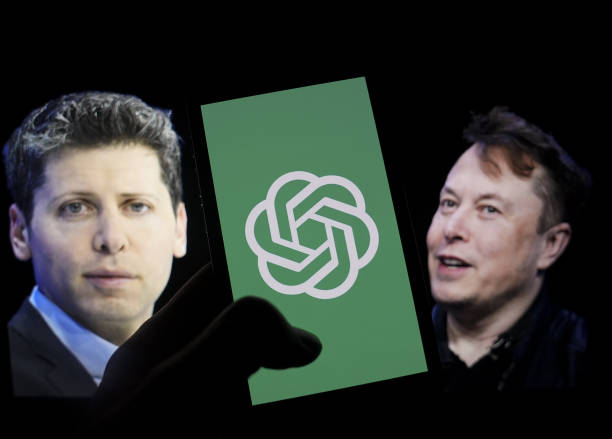
OpenAI has urged attorneys general in California and Delaware to investigate Elon Musk for alleged “improper and anti-competitive behavior” tied to his companies X and xAI.
The request, detailed in a letter from OpenAI strategy chief Jason Kwon, accuses Musk of using his platform X to harm the ChatGPT maker’s business and hiring efforts.
This move has now added a new regulatory dimension to what is already one of the most consequential legal disputes in the AI industry, especially as a high-profile trial between the two companies draws near.
What OpenAI Is Alleging
In the letter seen by CNBC, OpenAI’s chief strategy officer Jason Kwon alleged that Musk has been working to undermine OpenAI through various “attacks” on the company, including by “coordinating his efforts” with Meta CEO Mark Zuckerberg. Kwon also alleged that Musk and his associates conducted extensive opposition research on OpenAI CEO Sam Altman, including tracking his flights and movements, and circulating false allegations of sexual misconduct against him.
Additionally, Kwon argued that Musk’s lawsuit, which seeks more than $100 billion in damages from OpenAI’s nonprofit foundation, would “cripple the nonprofit” while “enriching [Musk] with funds that are intended to serve the public.”
Kwon further warned that Musk’s behavior could stop OpenAI’s efforts to bring about artificial general intelligence (AGI), writing that, “These attacks are designed to take control of the future of AGI out of the hands of those who are legally obligated to pursue the mission of ensuring that AGI benefits all of humanity, and put it into the hands of competitors who lack mission-driven principles and spurn any responsibility for safety.”
To crown it all, the letter also drew attention to Musk’s commercial interests in the dispute. It noted that a favorable legal outcome for Musk would directly benefit xAI’s Grok platform, which is currently under investigation in multiple countries for generating sexually explicit deepfakes of women and minors without their consent.
The Backstory to OpenAI and Elon Musk
Musk and OpenAI CEO Sam Altman co-founded the AI company in 2015 as a non-profit. Musk left in 2018, after unsuccessfully trying to convince executives to merge the company with Tesla. However, he later launched xAI as a competing venture and sued OpenAI in 2024, claiming he was “assiduously manipulated” and “deceived” when the company explored converting to a for-profit structure.
OpenAI then altered its structure in September 2025, where it signed a memorandum of understanding (MoU) and granted a 27% ownership stake to Microsoft, its longtime supporter, in a transition designed to maintain the startup’s nonprofit arm in control of its for-profit operations.
As such, Musk and his lawyers further escalated his original lawsuit, claiming that both OpenAI and Microsoft were owing him between $79 billion and $134 billion in damages. U.S. District Judge Yvonne Gonzalez agreed that Musk and his lawyers presented “plenty of evidence” at a hearing and allowed his broader case to proceed to trial. Jury selection is slated to begin on April 27 in the Northern District of California.
The Regulatory Angle
By directing the complaint to state attorneys general rather than keeping it within the existing civil case, OpenAI is asking state regulators to examine whether Musk’s network of companies, spanning X, xAI, Tesla, and SpaceX, has been used in ways that distort competition in the AI market.
This clash also highlights growing scrutiny on AI giants’ power. As trials unfold, outcomes may reshape partnerships, hiring, funding, and market access in the $100 billion-plus AI industry.


